
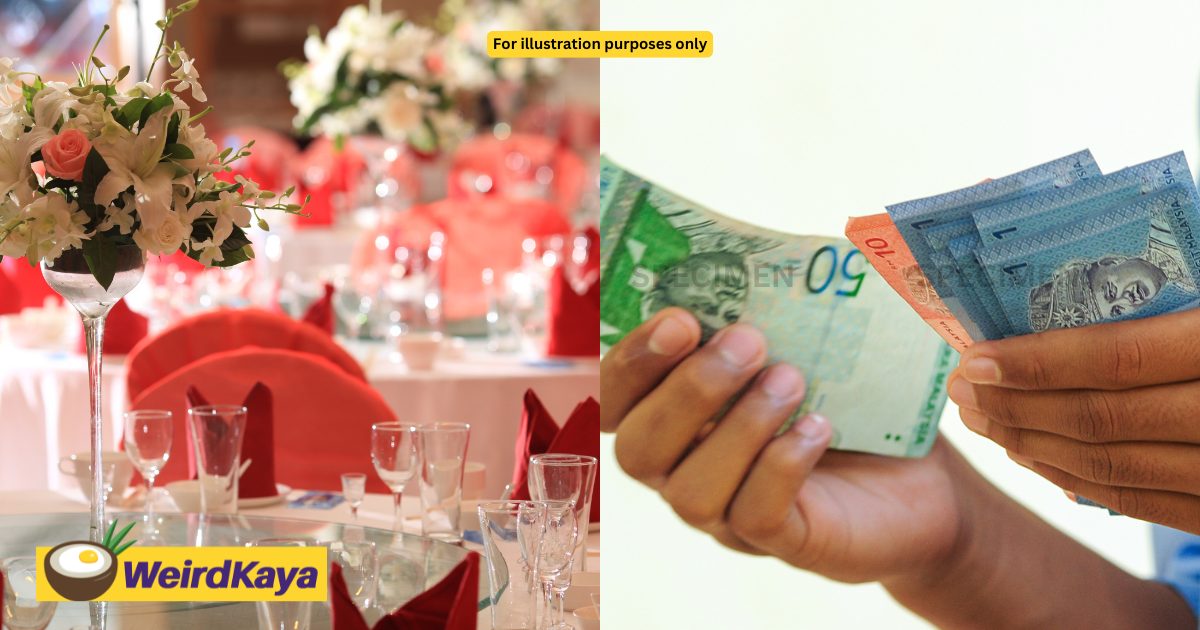
A discussion about wedding angpow rates in Malaysia recently sparked debate online after a netizen said her friend told her RM100 is no longer enough to give at weddings.
In a post shared on Xiaohongshu, the netizen said she was preparing to attend a friend’s wedding and planned to give an angpao of RM100.
However, her friend allegedly told her that the “market rate” is now “at least RM150”.
“I thought sincerity mattered more”
The netizen admitted she felt a little out of touch after hearing the comment.
“I always thought sincerity mattered more, and we’re not especially close either,” she wrote.
She added that her friend told her wedding angpao expectations are simply “like this nowadays”, otherwise it would “look bad”.
This left her wondering whether she was being too outdated, or whether wedding angpow culture had genuinely changed.
Some said they would rather skip the wedding
The post quickly drew responses from other Malaysians, many of whom said wedding dinners have become increasingly expensive to attend.
One commenter wrote:
“If we’re not that close, I genuinely think you don’t have to go. Nowadays people say angpao should be at least RM150. If you’re not close, not attending can even save the angpao money.”

Another said attending weddings sometimes feels like guests are helping couples “cover banquet costs”.
“Sometimes when I get invited, it feels more like helping them cover the cost of the wedding dinner.”

Others argued that angpow amounts should depend on personal financial ability and relationship closeness, instead of social pressure.
Another netizen commented that if wedding angpow rates continue increasing, attending weddings could become financially stressful for families.
“Red packets should come from the heart”
Several commenters also pushed back against treating weddings like a “cost recovery” exercise.
One user wrote:
“Red packets are a gesture of blessing. It should depend on relationship and ability, not be tied to ‘market prices’.”
The discussion has since sparked wider conversations online about rising wedding costs, social expectations, and whether angpow culture has become increasingly transactional.