

When I started thinking about switching from petrol to an EV, I did what most people do. I looked at the monthly instalment, compared it to what I was spending on petrol, and thought the maths seemed straightforward. Charging is cheaper than petrol. Road tax used to be zero. Lower maintenance. Easy decision, right?
Then I actually ran the numbers. All of them. And a few things surprised me enough that I think most people considering an EV in Malaysia in 2026 are missing parts of the real cost picture.
The charging is genuinely cheaper.
The insurance is not.
The road tax changed in January 2026 and most people do not know how the new structure works.
And there are hidden costs that only become obvious after you have already signed the loan agreement.
Here is the full honest breakdown, using real 2026 Malaysia figures.
Part 1: Charging | Home vs Public vs Highway
Charging at home is significantly cheaper than filling up with petrol.
But the gap between home charging and public charging is wider than most people realise, and if you rely heavily on public chargers, the savings shrink fast.
Home charging (TNB residential tariff)
Home charging uses your standard TNB residential tariff, which is tiered based on total monthly household consumption.
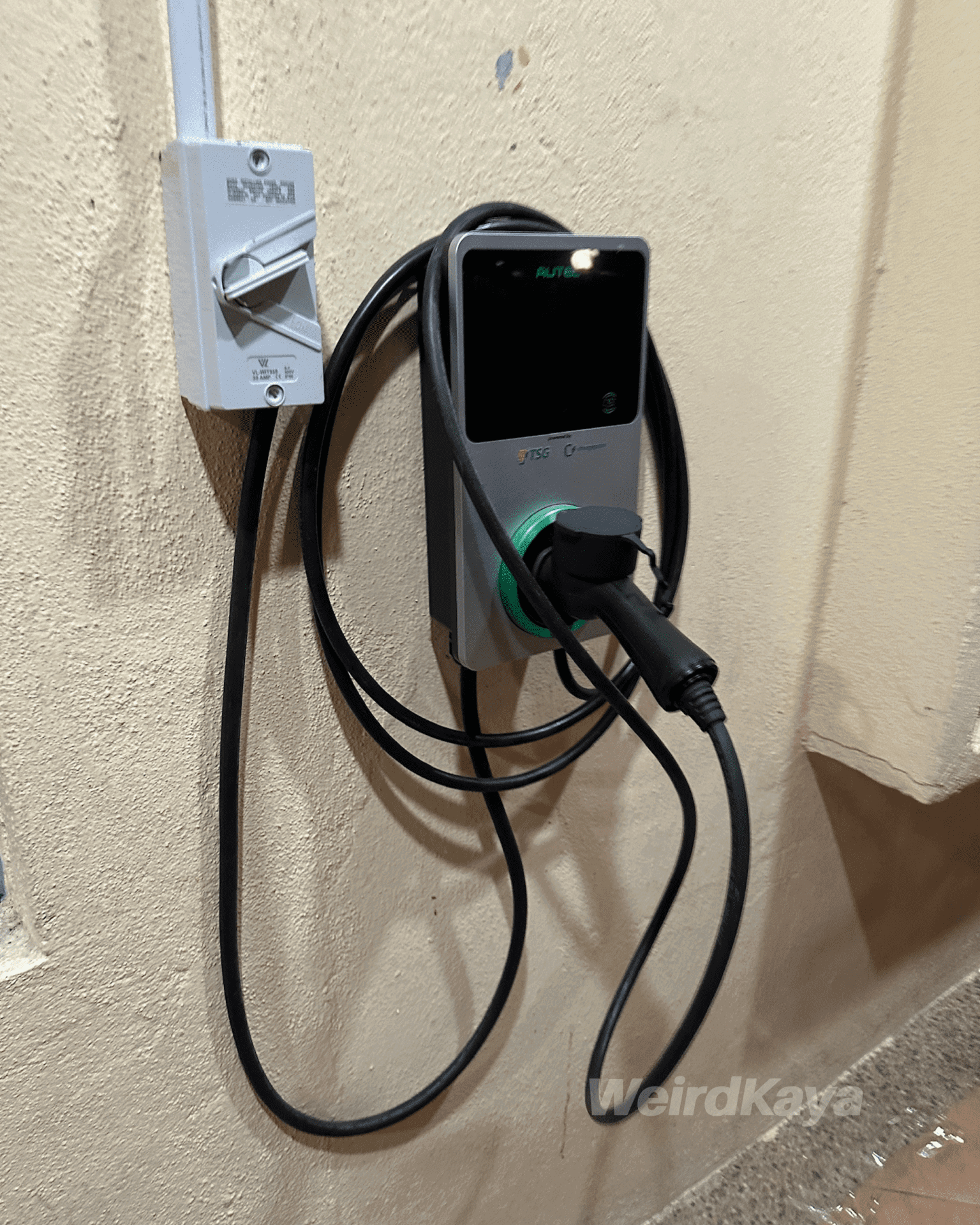
The rates run from RM0.218 per kWh for the first 200 kWh, up to RM0.571 per kWh for usage above 900 kWh.
Most households charging an EV overnight will likely push into the middle or upper tiers, paying around RM0.45 to RM0.57 per kWh in practice once the additional EV consumption is factored in.
| EV model | Battery size | Cost per full home charge | Est. monthly (1,500km) |
|---|---|---|---|
| BYD Dolphin | 44.9 kWh | RM20 – RM26 | ~RM60 – RM80 |
| BYD Atto 3 | 60.5 kWh | RM27 – RM35 | ~RM80 – RM105 |
| Tesla Model 3 SR | 60 kWh | RM27 – RM35 | ~RM85 – RM110 |
Source: TNB residential tariff 2025/26 (RM0.218–RM0.571/kWh), battery sizes from manufacturer specs. Assumes 10% charging loss. 1,500km/month average Malaysian urban driver. Petrol equivalent for same distance: RM180–RM250 (RON95 at RM1.99, 12L/100km average).
For someone driving 1,500km per month and charging mostly at home, the monthly fuel saving versus a petrol car is roughly RM100 to RM160.
Over a year, that is RM1,200 to RM1,920 in savings on fuel alone. The saving is real and consistent.
TNB’s Time-of-Use (ToU) tariff offers off-peak rates of 24.43 sen/kWh (up to 1,500 kWh) and 34.43 sen/kWh above 1,500 kWh.
Off-peak hours are 10pm to 2pm the following day on weekdays, plus all day on weekends and gazetted public holidays.
A full charge on a 60kWh battery during off-peak at 24.43 sen/kWh costs approximately RM14.66. That is the sweet spot for home EV ownership in Malaysia.
Public charging (AC and DC fast chargers)
Public AC chargers (slower, found at malls and offices) typically run RM0.50 to RM1.15 per kWh.
Public DC fast chargers average RM1.20 per kWh across major operators including Gentari, ChargEV, and JomCharge as of 2026.

At RM1.00 per kWh (some DC chargers), a full 60kWh BYD Atto 3 charge costs around RM61. At RM1.20 per kWh average, it is approximately RM73.
Part 2: Insurance | The Number That Surprised Me Most
EV insurance in Malaysia is currently 10% to 30% higher than equivalent ICE vehicles. This is not speculation.
It is the market reality in 2026 and it comes from three structural factors that are not going away quickly.
| Model | EV insurance (approx annual) | Petrol equivalent (approx) |
|---|---|---|
| Proton eMAS 7 (~RM100,000) | RM3,000 – RM5,000 | RM1,200 – RM1,700 (similar ICE) |
| BYD Atto 3 (~RM125,800) | RM2,500 – RM4,000 | RM1,000 – RM1,600 |
| More affordable EVs | RM800 – RM1,200 higher than ICE | Gap narrowing as EV market matures |
Source: BJAK EV Car Insurance Calculator Malaysia 2026, CalculatorMalaysia.com. At 55% No-Claim Discount (NCD), premiums drop substantially. Always compare across multiple insurers using Bjak or PolicyStreet before renewing.
The insurance gap is real. But it is important to contextualise it against the annual fuel saving of RM1,200 to RM1,920.
For a mid-range EV like the BYD Atto 3, if you are paying RM800 to RM1,200 more per year in insurance but saving RM1,500 to RM1,900 per year on fuel, the net position still favours the EV.
The higher the purchase price of the EV, the more the insurance gap eats into the operational savings.
One critical thing to check: not all comprehensive policies automatically cover battery damage in full.
Always confirm your policy explicitly covers battery damage from accidents, flooding, special perils, and fire before signing.
Part 3: Road Tax | The Change Most People Missed
EVs enjoyed zero road tax from 2022 until 31 December 2025. From 1 January 2026, road tax for EVs is reinstated under a new kW-based structure.
Rates are calculated on motor power output in kilowatts rather than engine displacement in cc (as applies to petrol cars).
The new rates are still significantly cheaper than equivalent ICE vehicles, but they are no longer free.
| EV model | Motor output | Road tax 2026 (est) | ICE equivalent (cc-based) |
|---|---|---|---|
| BYD Dolphin | 70 kW | ~RM40/year | ~RM90 (1.0L) |
| BYD Atto 3 | 150 kW | ~RM160/year | ~RM380 (2.0L) |
| Proton eMAS 7 | 200 kW | ~RM260/year | ~RM520 (2.5L) |
| Tesla Model 3 SR | 208 kW | ~RM280/year | ~RM520+ (2.5L) |
| Tesla Model Y Performance | 393 kW | ~RM1,015/year | ~RM1,500+ (4.0L+) |
Source: CalculatorMalaysia EV Road Tax Calculator 2026, JPJ kW-based structure effective 1 January 2026. Estimated figures, government rates reviewed every 5 years. ICE equivalents based on existing cc-based JPJ tariff.
The key takeaway: road tax for most mid-range EVs is still 40% to 85% cheaper than equivalent petrol cars.
The BYD Atto 3 at RM160 per year versus a 2.0L petrol car at RM380 is still a meaningful saving.
But high-performance EVs with large motor outputs pay substantially more, and anyone buying a performance EV for the road tax saving is going to be disappointed by the new structure.
The Full Monthly Cost Comparison
| Cost item | Petrol car (1.5L, RM90k) | EV (BYD Atto 3, RM125,800) |
|---|---|---|
| Monthly loan instalment | ~RM900 | ~RM1,600 |
| Fuel / charging (1,500km) | ~RM209 (RON95 RM1.99/L) | ~RM90 (home charging) |
| Insurance (monthly) | ~RM125 | ~RM208 – RM333 |
| Road tax (monthly) | ~RM30 | ~RM13 |
| Maintenance (monthly est.) | ~RM80 | ~RM30 |
| Total monthly (excl. loan) | ~RM450 | ~RM433 – RM593 |
The honest conclusion: while driving an EV may not always be the most economical choice in Malaysia, given higher insurance premiums, battery-related risks, and the relatively cheaper price of subsidised petrol, the overall driving experience is still a major plus.
EVs offer smoother acceleration, quieter rides, lower cabin vibration, and instant torque that makes daily driving feel more effortless. For many drivers, the appeal is not just about saving money, but enjoying a more refined, convenient, and future-ready way to drive.
Not financial or automotive advice. All figures in this article are based on publicly available data from TNB, JPJ, major insurers, and published cost analyses as of May 2026. Actual costs vary by model, usage, home electricity consumption tier, and insurer. Always get your own quotes before making a purchase decision.