This article is for educational purposes only and does not constitute legal advice. For any of the situations below, consult a qualified Malaysian employment lawyer before taking action.
Two things happen every time we publish a boss illegal things article. First, the comment section fills up with people saying “this happened to me.”
Second, a different group comments saying they had no idea what their boss was doing was against the law, because it was presented so matter-of-factly, wrapped in authority, and delivered with such confidence that questioning it never felt like an option.
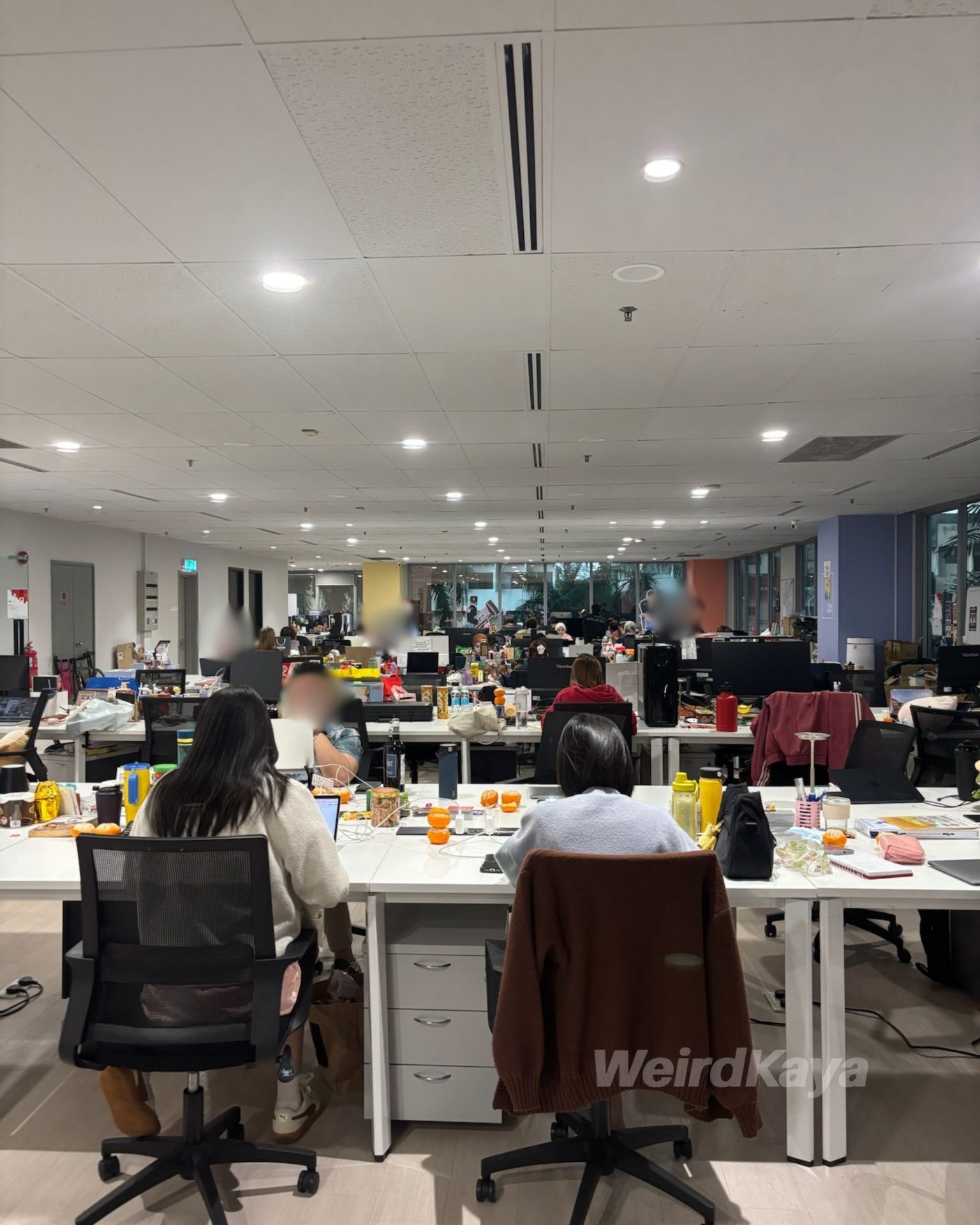
Photo by WeirdKaya. For illustration purposes only.
That second group is who Part 3 is for.
These are the violations that tend to fly under the radar the longest, often because they are either disguised as company policy, buried in contract language, or involve rights that most Malaysian employees simply do not know they have.
AI-generated image. For illustration purposes only.
The law exists. It just does not always announce itself.
1“Annual leave cannot be carried forward. Whatever you don’t use by December is gone.”
A blanket “use it or lose it” annual leave policy is not automatically enforceable in Malaysia. Section 60E of the Employment Act 1955 provides that an employee is entitled to annual leave and, critically, that any leave not taken due to the employer’s requirements must be paid out rather than forfeited. An employer cannot simply declare that unused leave expires at year-end if the reason it was not taken was operational, if the employee was denied the leave request, or if the employer’s policy conflicts with the statutory minimum entitlement.
Law: Section 60E, Employment Act 1955. Unused leave owed to the employee must be paid out, not forfeited, where it was not taken due to the employer’s requirements.
2“You came in late three times so we are deducting RM150 from your salary this month.”
Salary deductions in Malaysia are tightly controlled. Section 24 of the Employment Act 1955 lists the only permitted deductions: overpayment recovery, absence from work, EPF contributions, income tax, and a few other specific categories. Lateness is not a category that allows arbitrary monetary deductions unless the deduction is calculated proportionally on the actual time absent and documented properly. A flat penalty of RM150 for three late arrivals, without any contractual basis calculated on actual time missed, is not permitted. The employer may take disciplinary action through the proper process, but may not simply reach into your salary to do it.
Law: Section 24, Employment Act 1955. Deductions from wages only permitted for categories explicitly listed in the Act. Flat penalty deductions for lateness are not among them.
3“You need to buy your own laptop and uniform for this job. We will deduct it from your first three salaries.”
Requiring employees to purchase equipment, tools, or uniforms that are necessary to perform the job, and then recovering the cost through salary deductions, is impermissible without the employee’s written consent and where it falls within the categories allowed under Section 24 of the Employment Act. More broadly, employer deductions for items provided for the employer’s benefit, such as a company uniform or work tools, are not permitted unless they fall under the specific categories in the Act and the deduction does not reduce the employee’s wage below the minimum wage. This practice is particularly common in food and beverage, retail, and certain service sectors.
Law: Section 24, Employment Act 1955. Minimum Wage Order 2024. Deductions that reduce wages below RM1,700 are unlawful regardless of purported justification.
4“We suspect you of misconduct so we are checking your personal phone and messages.”
An employer does not have unrestricted rights to access an employee’s personal device or private communications. Accessing a personal phone, reading personal messages, or demanding passwords to private accounts without the employee’s genuine consent may constitute a breach of the Personal Data Protection Act 2010 (PDPA). The PDPA requires that personal data, including private communications, can only be collected and processed with consent and for a legitimate, disclosed purpose. The situation is different where a company-issued device is concerned and where a clear policy permitting monitoring has been disclosed at the start of employment. Even then, covert or blanket monitoring of all personal communications goes beyond what is generally permissible. If an employer suspects misconduct, the proper channel is a domestic inquiry under Section 14 of the Employment Act 1955, not warrantless access to your private accounts.
Law: Personal Data Protection Act 2010 (PDPA), Section 14 Employment Act 1955. Accessing an employee’s personal device or private messages without consent is not a legitimate employer right and may breach the PDPA.
5“Mental health is not a valid reason for sick leave. If you are not hospitalised, you come to work.”
Sick leave under Section 60F of the Employment Act 1955 covers illness certified by a registered medical practitioner. There is no provision in Malaysian employment law that limits sick leave to physical conditions only. A registered medical practitioner can certify that an employee is unfit for work for mental health reasons, and that certification carries the same legal weight as one for a physical illness. An employer who refuses to accept a valid medical certificate citing mental health, or who treats mental health-related sick leave differently from physical illness leave, is not acting in accordance with the law. Since the 2022 amendments, the Act also strengthens protections around medical certification and the conditions under which sick leave can be legitimately disputed.
Law: Section 60F, Employment Act 1955. Sick leave certified by a registered medical practitioner is valid regardless of whether the condition is physical or mental.
6“We are restructuring. Sign this new contract with the adjusted terms or we will have to let you go.”
An employer cannot unilaterally impose materially worse terms on an existing employee and then threaten dismissal for refusing to sign. Under Malaysian contract law (Contracts Act 1950) and the Industrial Relations Act 1967, a valid variation of employment terms requires genuine mutual agreement. Coercing an employee into signing a new contract by threatening termination as the alternative is not consensual agreement. If the new terms are materially worse, an employee who is forced to accept them or face dismissal may have a claim for constructive dismissal under the Industrial Relations Act 1967. The employee does not have to sign. They can escalate to the Industrial Relations Department.
Law: Contracts Act 1950, Industrial Relations Act 1967. Unilateral variation of employment terms without genuine consent may constitute constructive dismissal.
7“We sponsored your training. If you leave before two years, you owe us back RM8,000. Sign here.”
Training bonds are legal in Malaysia under the Contracts Act 1950, but only when the terms are reasonable, disclosed clearly before the training begins, and not so onerous as to constitute a penalty clause rather than a genuine pre-estimate of loss. Courts have struck down training bonds where the amount is disproportionate to the actual cost of training, where the bond was introduced after the employee had already started, or where the duration is unreasonably long. An employee who signs a training bond under duress, without being given adequate time to review it, or after the training has already been completed, has grounds to challenge its enforceability. Training bonds cannot be used to effectively trap an employee in a role.
Law: Contracts Act 1950. Training bonds must be reasonable in amount and duration, disclosed in advance, and not constitute an unenforceable penalty clause.
8“We received your harassment complaint. We looked into it internally and found nothing wrong. Case closed.”
Since the 2022 amendments to the Employment Act, Section 81B requires employers to inquire into any sexual harassment complaint received. The inquiry must be conducted properly: it cannot be dismissed without investigation, it cannot be handled by the alleged harasser or their close associates, and the complainant must be informed of the outcome. An employer who simply declares the case closed after an internal review that amounts to asking the accused if they did it, and concluding they did not, has not fulfilled the statutory obligation. The employee whose complaint was dismissed improperly can escalate to the Director General of Labour. Failure to properly inquire is itself an offence under the Act.
Law: Section 81B, Employment Act 1955 (2022 Amendment). Employers are legally required to properly investigate sexual harassment complaints. A sham investigation is not compliance.
9“You are not an employee. You are a freelancer. We don’t owe you EPF or SOCSO or any benefits.”
Calling someone a freelancer or contractor does not make them one in the eyes of Malaysian law. The distinction between an employee and an independent contractor is determined by the actual nature of the working relationship, not the label the employer applies. Factors courts and the Industrial Relations Department consider include: who sets the working hours, whether the worker works exclusively for one party, whether the employer controls how the work is done, and whether tools and workspace are provided by the employer. If the relationship is substantively one of employment, the worker is entitled to EPF contributions, SOCSO coverage, and the protections of the Employment Act regardless of what the contract says they are called. This misclassification is increasingly common in gig and creative sectors.
Law: Industrial Relations Act 1967, EPF Act 1991. Employment status is determined by the nature of the working relationship, not the label in the contract.
10“If you report us to JTK, we will make sure you never work in this industry again.”
Threatening or retaliating against an employee for making a complaint to a government authority is a serious matter. The Whistleblower Protection Act 2010 (Act 711) provides protection to individuals who disclose improper conduct to enforcement agencies, including the Department of Labour. An employee who is dismissed, demoted, harassed, or threatened after making a complaint to a government authority may have protection under this Act, and the employer’s conduct itself may constitute an offence. Separately, the threat to blacklist someone from an industry for exercising their legal rights may also give rise to claims under contract law and the Industrial Relations Act. This threat is designed to intimidate. It is not as legally sound as the person making it usually believes.
Law: Whistleblower Protection Act 2010 (Act 711). Retaliation against employees for reporting to government authorities is itself an offence and does not benefit from legal protection.
What To Do If Any Of These Have Happened To You
Documentation comes first. Before you report anything, gather what you can: payslips showing deductions, messages or emails containing the threats or directives, your employment contract, and a timeline of what happened and when. You do not need a lawyer to file an initial complaint with the Department of Labour. The process is free.
Issue type
Where to report
Contact
Salary deductions, leave, sick leave, rest days
Jabatan Tenaga Kerja (JTK)
jtksm.mohr.gov.my | 1800-88-5051
Unfair dismissal, forced contract changes
Jabatan Perhubungan Perusahaan (Industrial Relations)
jhpnet.mohr.gov.my
Sexual harassment complaints dismissed
Director General of Labour (JTK)
jtksm.mohr.gov.my | 1800-88-5051
Whistleblower retaliation
Malaysian Anti-Corruption Commission (MACC) or the relevant enforcement agency
sprm.gov.my | 1800-88-6000
EPF non-compliance, misclassification
KWSP (EPF)
kwsp.gov.my | 03-8922 6000
Not legal advice. This article explains Malaysian employment law based on publicly available legislation and published legal commentary. For your specific situation, consult a qualified Malaysian employment lawyer or contact the Department of Labour (Jabatan Tenaga Kerja). File complaints at jtksm.mohr.gov.my or call 1800-88-5051.