


You are sitting in a job interview when the recruiter suddenly asks, “What is your current salary?”
For many Malaysian jobseekers, this can be an uncomfortable question. Giving an honest answer may feel like the easiest option, but it could also affect how much the company eventually offers you.
So, are you required to reveal your current salary? And what should you say if you do not want to answer?
Why do employers ask about your current salary?
Employers may ask because they want to know whether your expected salary fits within their hiring budget.
They may also use your current salary to estimate how much of an increase would convince you to leave your present job.
However, your existing salary does not always reflect what you should be paid in a new position. The new job may involve greater responsibilities, longer hours, specialised skills or a completely different level of seniority.
According to Jobstreet Malaysia’s guide on answering salary expectation questions, candidates should consider factors such as the role, market rate, location, experience and qualifications when determining their expected salary.
Is it illegal for employers to ask?
Malaysia does not currently have a specific law that directly prevents an employer from asking candidates about their current salary during an interview.

However, candidates are not necessarily required to answer every question, especially when it involves personal information they do not feel comfortable sharing.
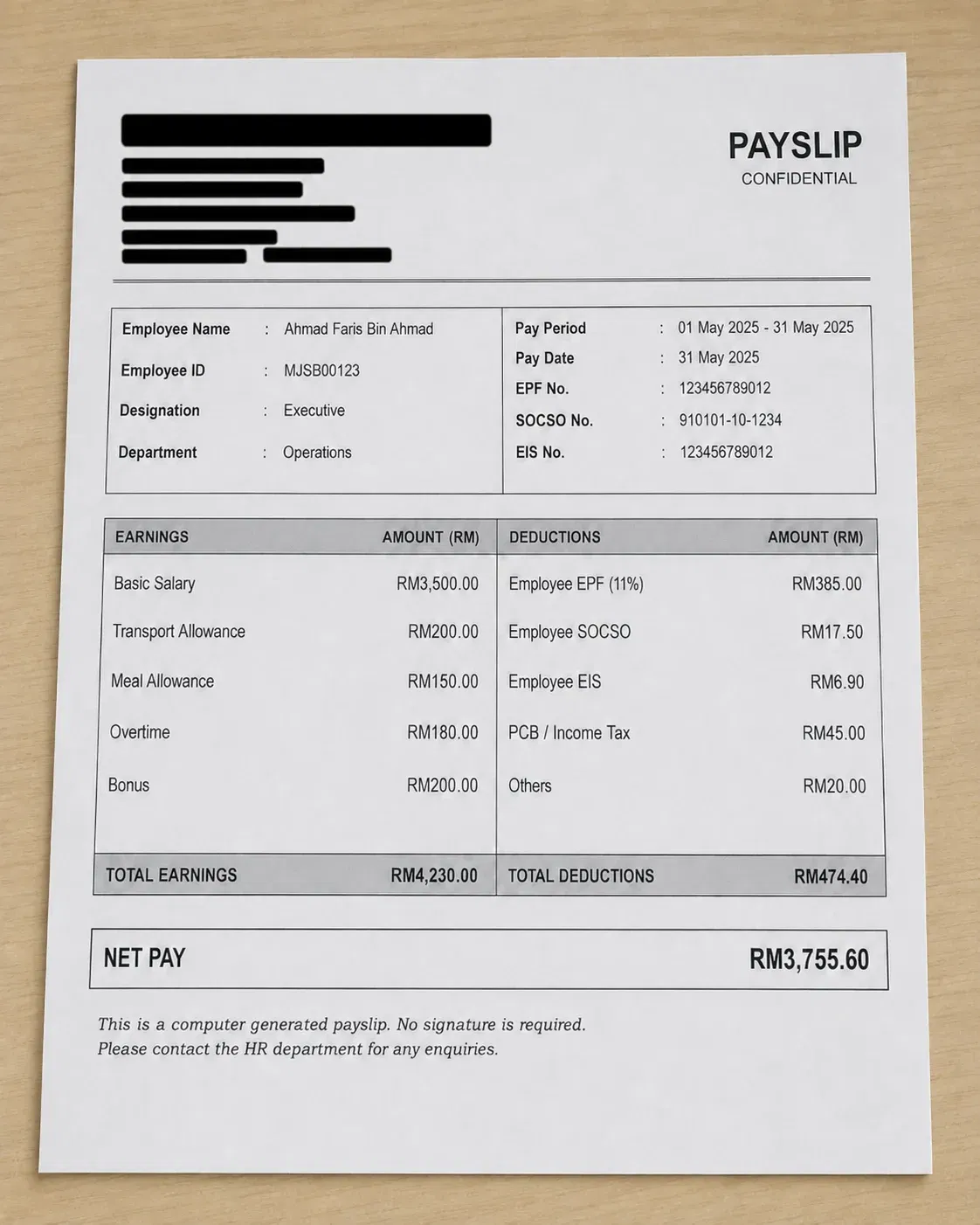
The situation becomes more sensitive when an employer asks for a copy of your payslip. A payslip may contain private financial information, including your salary, deductions and tax contributions.
Under Malaysia’s Personal Data Protection Act 2010, organisations that collect and process personal data must follow several principles covering matters such as notice, consent, security and access.
An employment lawyer quoted in Jobstreet Malaysia’s article on inappropriate interview questions also said employers should obtain a candidate’s voluntary consent before collecting their previous payslip.
Candidates who are uncomfortable providing it may choose not to consent.
Why revealing your salary could put you at a disadvantage
The biggest concern is that your current salary may become an anchor during negotiations.

For example, imagine you currently earn RM3,500, but the new role normally pays between RM5,000 and RM6,000.
After learning your salary, the company may offer you RM4,200. While this represents a 20% increase from your existing pay, the amount may still fall below the market value of the new position.
Your salary could also be lower because:
- You joined your current company as a fresh graduate
- You have not received a salary adjustment for several years
- You accepted lower pay in exchange for flexibility
- You recently gained new skills or qualifications
- Your current employer pays below the market rate
In these situations, using your existing salary as the starting point could cause you to remain underpaid even after changing jobs.
When revealing it may help
Sharing your salary is not always a bad decision.
It may help when your current total compensation package is already strong and you want the new employer to understand what it would take for you to move.
For instance, your basic salary may be RM5,000, but you may also receive an annual bonus, medical coverage, allowances and flexible working arrangements.
Accepting a basic salary of RM5,500 without the same benefits may not actually leave you better off.
Candidates should therefore compare the entire remuneration package instead of looking only at the basic salary.
Bonuses, insurance, leave entitlement, allowances, flexibility and professional development opportunities can all affect the actual value of an offer, as explained in Jobstreet Malaysia’s remuneration negotiation guide.
How to answer without revealing your salary

You do not have to become defensive or reject the question aggressively.
Instead, you can redirect the conversation towards your expected salary and the value of the position.
You could say:
I would prefer to focus on the responsibilities and market value of this role. Based on my experience and research, I am looking for a salary between RM5,000 and RM5,500.”
This answers the employer’s main concern, which is whether your expectations fit within their budget, without revealing your existing pay.
Jobseekers are also encouraged to research salary benchmarks, decide on their minimum acceptable amount and provide a reasonable salary range instead of one fixed figure.
What if you are comfortable sharing it?
Be clear about whether you are referring to your basic salary or your total compensation.
For example:
My current basic salary is RM4,500. I also receive an annual bonus, medical coverage and a monthly travel allowance. Based on the responsibilities of this position, I am targeting a total package of around RM5,500 to RM6,000.”
This prevents the employer from comparing only the basic salaries while ignoring the benefits you may lose by changing jobs.
What if the employer asks for your payslip?
Before providing it, you can politely ask:
Could you explain why the payslip is required and how the information will be used and protected?”
You can also offer an alternative:
I am happy to discuss my salary expectations and the compensation required for me to accept the position, but I would prefer not to share my current payslip.”
An employer requesting personal information should have a clear reason for collecting it and should explain how the information will be processed and protected.
Never lie about your salary
There is a difference between choosing not to reveal your salary and providing a false figure.
Inflating your existing pay may create problems if the employer later requests supporting documents or notices inconsistencies in the information you provided.
A safer option is to decline politely and redirect the discussion towards your expected salary.
Ask for the company’s budget first

You can also turn the question around professionally by asking:
May I know the approved salary range for this position?”
Knowing the company’s budget can prevent you from giving a figure that is unnecessarily low.
However, make sure you research the market beforehand. Consider the responsibilities of the role, your years of experience, achievements, work location and the full benefits package.
The bottom line
You do not automatically need to reveal your current salary simply because an interviewer asks.
Whether you share it should depend on whether the information strengthens or weakens your negotiating position.
If your existing salary is below the market rate, it may be better to focus on the value of the new role. If your current compensation package is strong, sharing it clearly could help explain why you are requesting a higher offer.
Most importantly, do not let your previous salary decide your future salary.
Your expected pay should reflect the work you are being hired to do, the experience you bring and the current market value of the position.
This article is for general information only and does not constitute legal advice.