

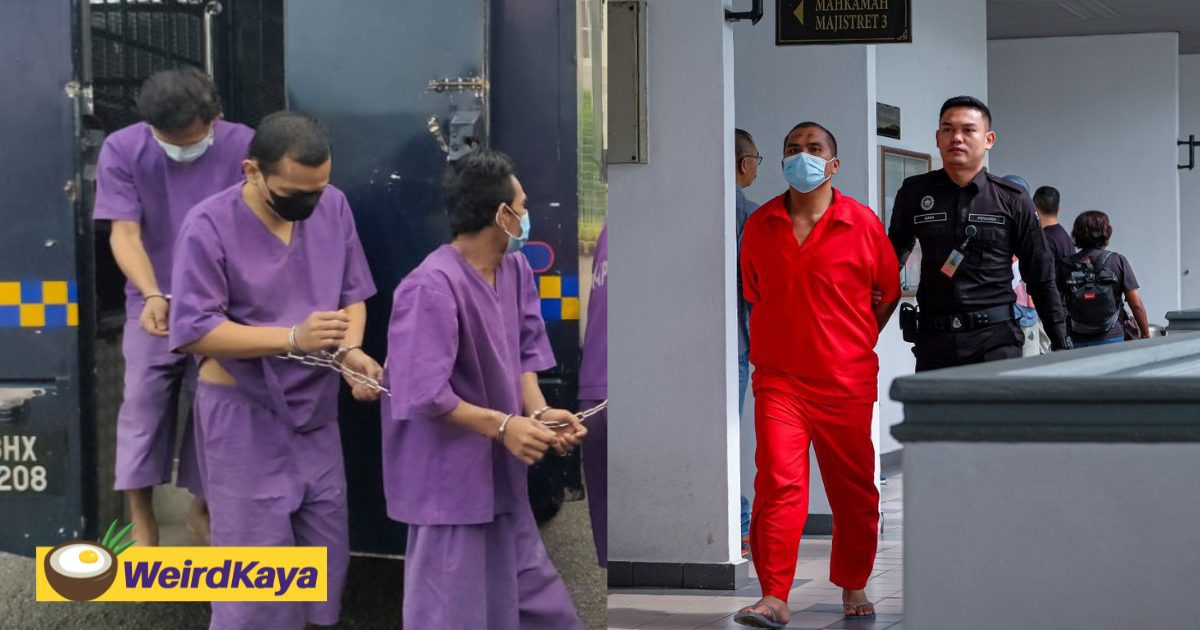
If you’ve ever come across photos or videos of detainees in Malaysia, you might notice something interesting; they don’t all wear the same colour.
Some are in orange, others in purple, while convicted prisoners may appear in red, green, blue, or even white.
At first glance, it might seem random, but there’s actually a system behind it.
These colours are generally used to indicate a person’s legal status, stage of detention, or progress in their sentence although the exact usage can vary slightly depending on the authority handling the case.
Not all detainees wear the same colour
One key distinction that is often misunderstood is between orange and purple uniforms.
According to a report quoting the Malaysian Anti-Corruption Commission (SPRM) chief, orange attire is used for detainees under SPRM custody, while purple is typically used for those under police custody (PDRM).
This means the colour is not just about appearance, it can also reflect which enforcement agency is handling the case.
What each colour generally represents
While practices may vary slightly, public explainers and reports commonly associate the following meanings with each colour:
🟣 Purple — Remand detainees

Usually refers to individuals who are awaiting court proceedings.
In Malaysia, remand occurs when police apply to a Magistrate to detain a suspect beyond 24 hours for investigation. The detention period is legally limited depending on the offence.
🟠 Orange — Lock-up / OKT (Orang Kena Tuduh)

Commonly linked to individuals who are still under investigation and have not been convicted.
In certain cases, such as under SPRM, orange is specifically used to distinguish their detainees from others.
⚪ White — Short-term sentence

Typically associated with inmates serving shorter sentences, often for less serious offences.
🔴 Red — Long-term sentence (early stage)

Worn by prisoners who are serving longer jail terms, particularly in the early phase of imprisonment.
🟢 Green — Rehabilitation phase

Indicates that an inmate has already served part of their sentence and is undergoing rehabilitation.
🔵 Blue — Long-term / working inmates

Often linked to inmates who have been in prison longer and may be involved in work programmes within prison facilities.
🌿 Light green (Pucuk Pisang) — Pre-release

Refers to inmates who are nearing the end of their sentence, sometimes with less than a few months left.
Some may be selected for supervised work outside prison as part of reintegration efforts.
⚪🔴 White + Red — Death row

Associated with inmates awaiting execution or the outcome of an appeal.
Can detainees wear normal clothes?
In some situations, yes but it depends on the stage of the case and approval from authorities.
For example, during the early stage of detention, some individuals may initially wear their own clothes before being issued standard attire.
When appearing in court, there are also cases where individuals are allowed to wear normal clothing, but this is subject to permission.
Regardless of attire, individuals under remand still have certain rights, including access to legal representation, medical care, and basic necessities.
There’s also a path towards reintegration
Beyond uniforms, Malaysia’s prison system also includes rehabilitation and reintegration programmes.
Eligible inmates may be considered for parole, which allows them to serve the remainder of their sentence outside prison under supervision.
This usually requires them to have served part of their sentence, completed rehabilitation programmes, and meet other conditions set by authorities.
More than just colours
While it may look like just different outfits, these colours actually help authorities quickly identify a person’s status in the legal system whether they are under investigation, awaiting trial, serving a sentence, or nearing release.
So the next time you see detainees in different coloured uniforms, you’ll know there’s more meaning behind it than meets the eye.