

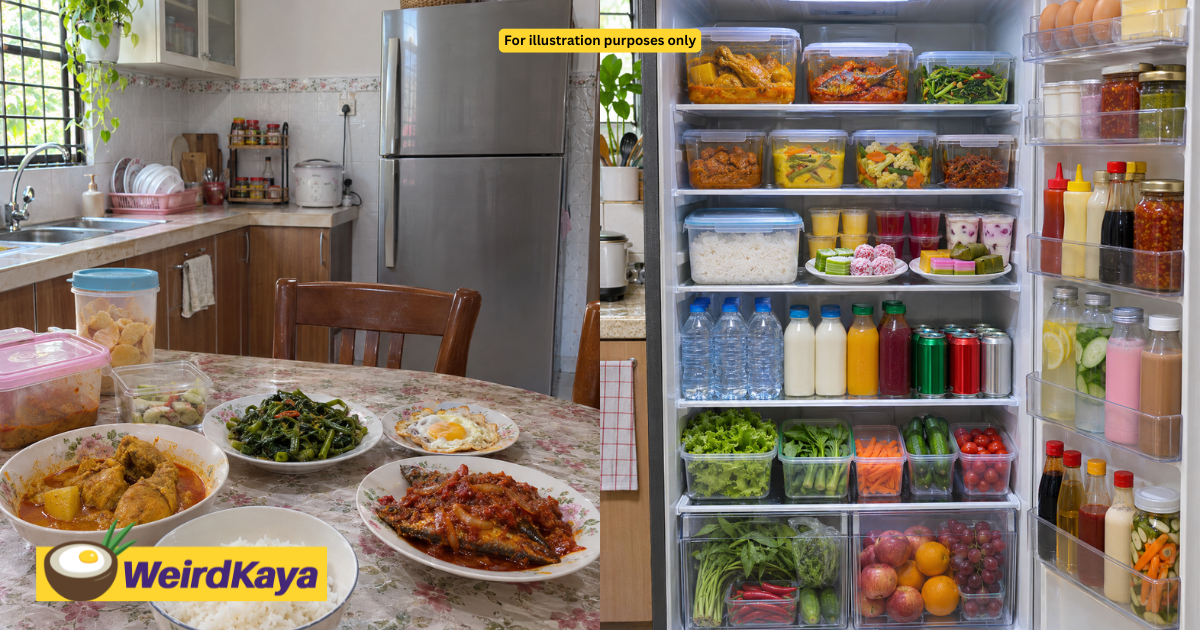
Cooking extra food and keeping it for another day is something many of us do, especially when there’s barely enough time to cook after work.
But a Threads post warning about dishes left in the fridge had some people wondering whether their weekly meal prep could be putting their health at risk.
While food storage safety matters, the post’s claim linking refrigerated leftovers to liver cancer needs clarification.
Warned against keeping leftovers for weeks
In the post, Threads user @dellniel claimed that keeping and reheating dishes stored in the fridge for weeks could expose people to aflatoxins, which he linked to liver cancer.

He urged households to keep cooked dishes for a maximum of three days and avoid holding on to old food just because they did not want to waste it.
The post prompted several users to ask whether preparing meals for an entire week was unsafe.
“So we can’t meal prep for a week?” one commenter asked.
Another described cooking large batches, dividing the food into containers and reheating portions throughout the week, before asking whether that practice was also a problem.
Clarified that he meant food kept in the chiller

Responding to the questions, the original poster clarified that he was referring to old dishes left in the fridge’s chiller compartment, rather than meals frozen after preparation.
“The keyword is ‘old leftovers’” he wrote in Malay.
He added that his warning concerned dishes left in the chiller for a week, and told those preparing meals ahead to use the freezer.
Other commenters shared their own routines, with some saying they preferred cooking just enough for each meal to avoid having leftovers.
A commenter questioned the aflatoxin claim
However, one commenter, pointed out that the reminder to finish leftovers promptly should be separated from the claim about liver cancer.
He explained that aflatoxins are associated with contaminated ingredients such as peanuts, dried chillies and spices, particularly under warm and humid storage conditions, rather than being caused by reheating refrigerated dishes.
According to the World Health Organization (WHO), aflatoxins are toxins produced by certain moulds that can contaminate crops including cereals, nuts and spices. Exposure can damage the liver, and there is evidence that aflatoxins can cause liver cancer in humans.
However, this does not establish that reheating refrigerated leftovers itself causes liver cancer.
Proper storage is what matters for meal prep
For anyone now nervously looking at their meal prep containers, the practical takeaway is to pay attention to how quickly food is chilled, how cold it stays and how long it is stored.
The US Department of Agriculture (USDA) advises using refrigerated leftovers within three to four days, or freezing them for longer storage.
It also recommends dividing leftovers into shallow containers so they cool quickly, and refrigerating them within two hours. That window drops to one hour when the surrounding temperature exceeds approximately 32°C. Refrigerated food should be kept at around 4°C or below.
If you’re cooking for the whole week, freeze the portions you won’t eat within that refrigerated storage window.
Saving food for another meal can be practical. Just make sure “I’ll eat it tomorrow” doesn’t keep getting pushed to next week.