

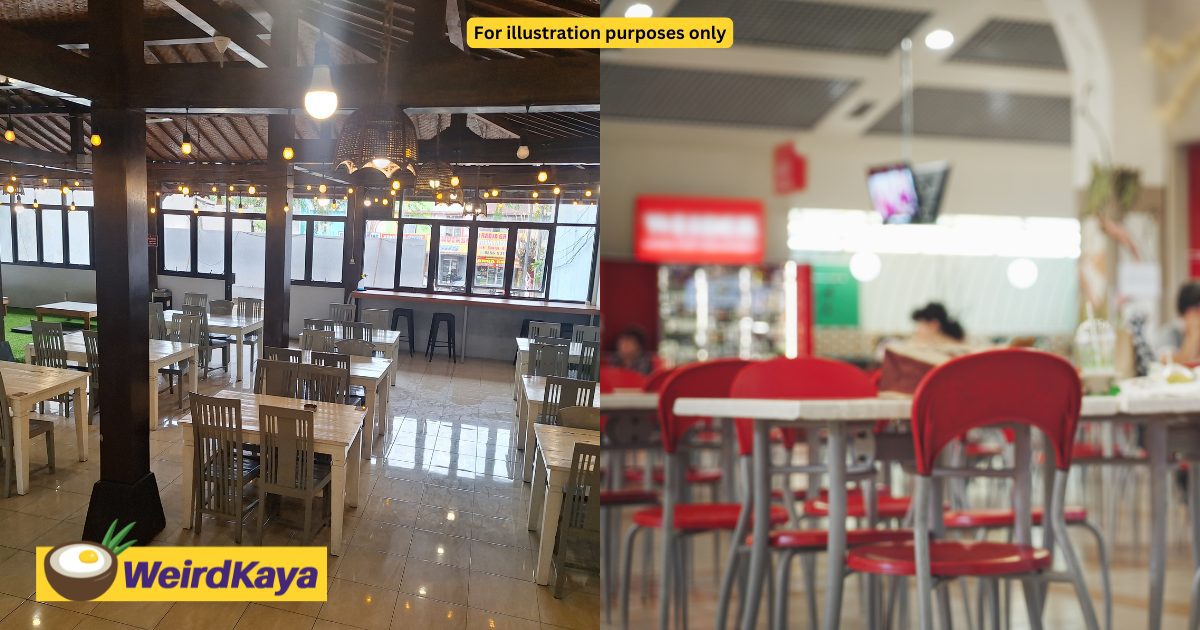
Food stall operators near government offices are bracing for quieter days as Malaysia’s work-from-home (WFH) directive continues to keep civil servants away from their usual lunch spots.
According to Malay Mail, stall owners say the once-bustling food courts around government complexes, especially near Jalan Duta and Putrajaya, have seen a sharp drop in customers since the policy began on April 15.
Lunch crowds disappear almost overnight
Typically packed during breakfast and lunchtime, these eateries are now noticeably quieter, with empty tables and shorter queues becoming the norm.

The WFH directive is implemented on a staggered basis, commonly on Tuesdays, Wednesdays and Fridays, reducing the number of workers physically present in offices.
For many hawkers, the impact has been immediate and significant.
‘Feels like Covid-19 again’
A food stall operator, Siti Kulsum Ambrin, said business has dropped by around 30 per cent, with regular customers informing her ahead of time that they would be working from home.
She has since revived delivery services — a strategy she relied on during the pandemic — to stay afloat.
It feels like the Covid-19 pandemic has hit us again,” she said, noting that daily earnings now barely cover ingredient costs and overheads.

Fewer business days, lower sales
Other vendors echoed similar struggles, saying foot traffic has dropped so drastically that food preparation has been cut down.
One hawker who sells claypot dishes said she now prepares only a fraction of her usual stock, describing the area as so empty one could “roll around on the floor”.
With most stalls closed on weekends, many vendors are effectively left with just two viable business days each week, further squeezing their income.
Meanwhile, a juice stall operator shared that fruit orders have been halved, with overall sales falling between 20- 30%.
Compounding economic pressures
The downturn comes on top of rising costs linked to global factors, including the ongoing Middle East conflict, which has already affected prices of essential goods.
Even before the WFH directive was officially announced, some operators had already noticed fewer customers dining in.
With uncertainty over how long the policy will remain, many small business owners are exploring alternatives such as delivery, reducing stock, or adjusting operating hours.
Still, for many, the hope is simple — that office crowds will return soon.
If you ask me when this will end, I wish it’s tomorrow,” one vendor said.