


If you’ve been wondering why food prices feel like they’re creeping up, this might be one reason you don’t usually see.
Fertiliser.
It may not sound like a big deal, but for farmers, it is everything. And right now, it’s becoming harder to get, and more expensive than ever.
Malaysia’s fertiliser problem is getting more serious
Globally, fertiliser supply is under pressure due to geopolitical tensions, export restrictions, and disruptions to major shipping routes.
For Malaysia, the impact is immediate.
The country currently produces only about 39% of its fertiliser needs locally, meaning the rest has to be imported. At the same time, key suppliers like China have tightened exports to protect their own food security, while tensions in critical routes such as the Strait of Hormuz have pushed up costs and delivery times.
In some cases, prices of raw materials have surged by 100% to 150% within weeks, forcing local producers to pause new orders.
When fertiliser becomes more expensive, farmers have to make tough choices. And eventually, those costs can trickle down to consumers.
As highlighted by Deputy Prime Minister and Minister of Energy Transition and Water Transformation, Datuk Amar Haji Fadillah bin Haji Yusof during the launch of the National Food Security Policy 2030, rising input costs could trigger a chain reaction leading to higher global and local food prices.
But not all farmers are affected the same way
Large-scale farms may still have the resources to manage rising costs. Smallholders don’t.
With tighter budgets and smaller output, even a slight increase in fertiliser prices can hit hard. For them, consistent and affordable access to fertiliser isn’t just helpful, it’s essential.
So the question is:
What if there was a more affordable, local alternative?
What if waste could be turned into fertiliser?
That’s exactly what Indah Water Konsortium (IWK) is working on.
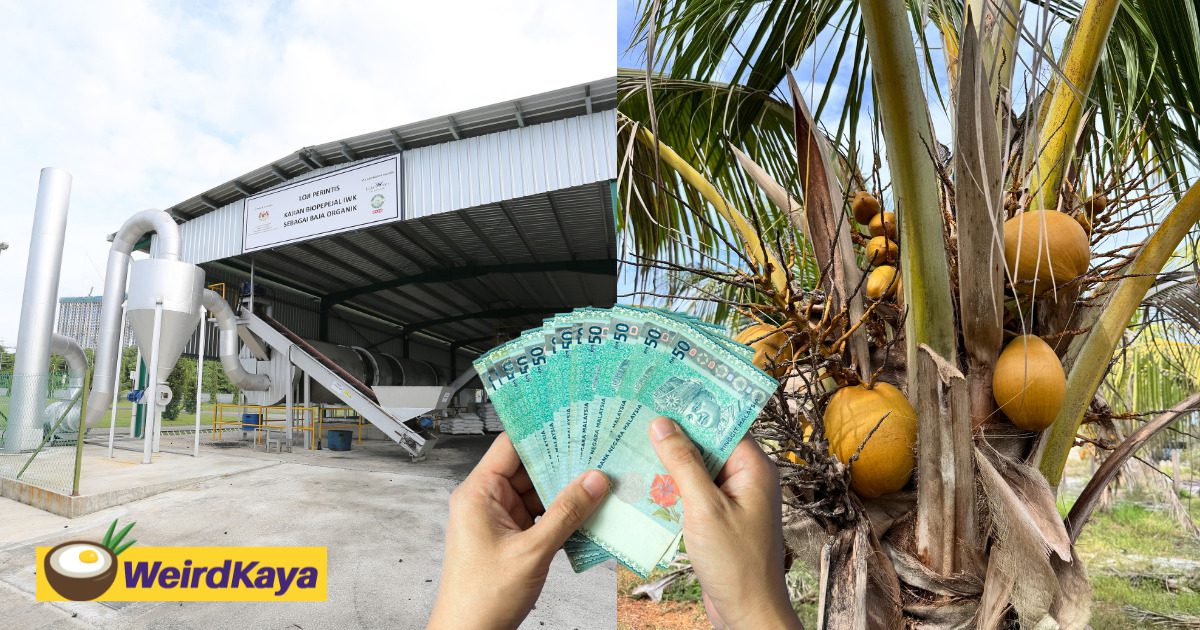
Through its research arm, Indah Water Research Centre (IWRC), IWK has developed an organic fertiliser made from biosolids, a by-product from sewage treatment plants.


The study evaluated its effectiveness on both landscape plants such as vinca, marigold, Japanese rose and petunia, as well as food crops including okra, mustard greens, brinjal and sweet potato under greenhouse conditions.
The results showed clear improvements in plant growth and soil quality. The fertiliser provides essential nutrients such as nitrogen, phosphorus and potassium, which are necessary for healthy crop development.
Importantly, no heavy metals were detected in the plant tissues of the food crops, indicating that the fertiliser is safe for agricultural use.
So… does it actually work?
Short answer: yes.
In one field trial, coconut trees that were badly affected by extreme heat showed clear signs of recovery after using IWK’s fertiliser and plant booster. Within five months, new leaves appeared and fruit production resumed.


Another trial using Napier grass over 15 months showed stronger growth and higher biomass production.

But here’s the part that really matters to farmers; cost.
The same coconut trial recorded an estimated 68% reduction in fertiliser costs, as farmers needed less frequent and lower volume applications compared to conventional fertilisers.
Designed to be efficient, not just cheaper
Unlike conventional fertilisers that often rely on higher application volumes, IWK’s organic fertiliser focuses on delivering nutrient-rich applications that improve efficiency.
This means farmers can achieve comparable results using lower quantities, which is especially important when supply is uncertain.
The fertiliser contains around 7% NPK content and is designed not only to supply nutrients, but also to improve soil condition.
Over time, it helps rebalance soil acidity caused by prolonged use of chemical fertilisers, supporting healthier soil ecosystems and more sustainable crop production.
The product has also undergone extensive safety testing, including toxicology studies and compliance checks. A Material Safety Data Sheet has been developed to ensure proper handling and safety standards.


It has also received religious approval in Malaysia
Another important consideration is public acceptance.
In Malaysia, the use of biosolids-based fertiliser has been reviewed by religious authorities. The National Council for Islamic Religious Affairs concluded that its use is permissible, provided it is safe and beneficial.
This position is further supported by state-level fatwas, including Pahang, as well as earlier approvals from Negeri Sembilan, Kedah and Selangor.
Why this matters now more than ever
Right now, Malaysia is working to secure fertiliser supply through imports and new partnerships.
But relying only on external sources comes with risks.
That’s why local alternatives like this matter.
Currently, IWK is capable of producing about 4 to 5 tonnes of organic fertiliser per day, with potential to scale further and expand facilities across Northern, Central, Eastern and Southern regions of Peninsular Malaysia.
A small solution, but a meaningful one
This may not completely replace imported fertiliser overnight. But for smallholder farmers, it could make a real difference.
Lower costs. More stable supply. Healthier soil. And for the rest of us?
It’s one step towards a more secure and sustainable food system.
The table below shows the comparison between permissible limits of parameters allowed under the Malaysian Standards versus perimeters of IWK’s Dried Biodolids and IWK’s organic fertiliser.