

A founding circle of 19 leaders from across Southeast Asia has signed the HumAIne Manifesto, marking the public launch of the HumAIne Movement — a global movement for people who embrace AI to become more human, not less.

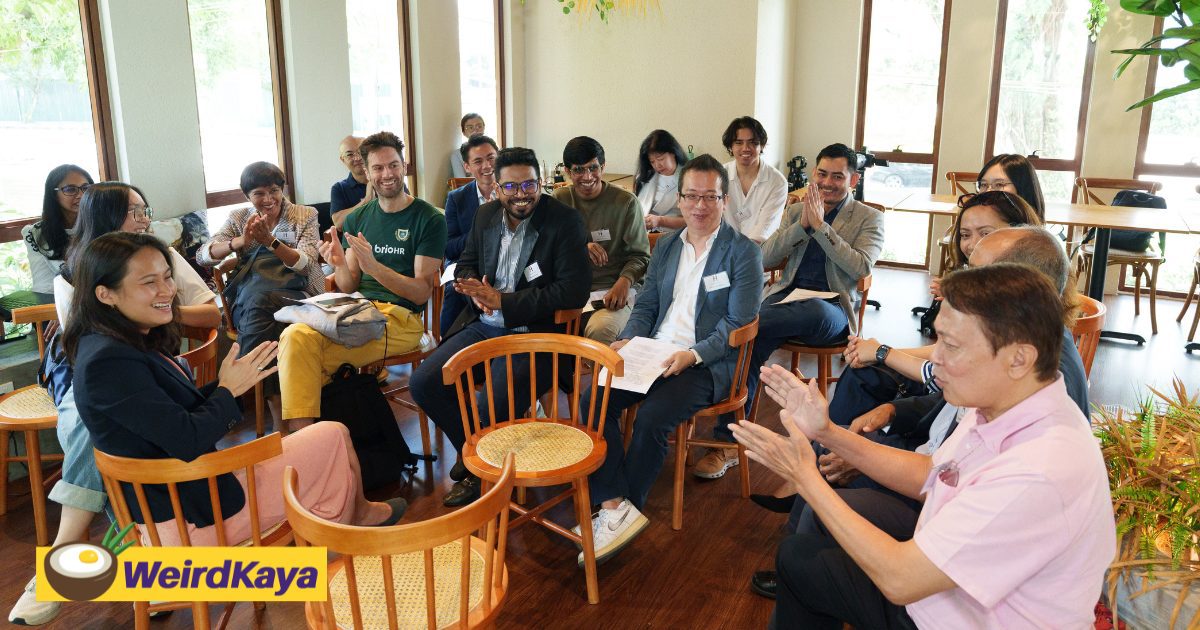
The signatories put their names to the Manifesto at a closed-door gathering, the HumAIne Manifesto Signing & Kickoff, held at The Ruai Room in Kuala Lumpur on 23 June 2026.

The movement was founded by Aster Wei Su Hwa and co-initiated by Chang Yin Jue, who are co-founders of Otti NeuroLearning Institute, a research and training institute specialising in human-AI synergy.

Most of the global conversation about AI focuses on capability: what AI can do, how fast it is improving, and which jobs it will change.
The HumAIne Movement starts from a different question — as AI advances, what will humans become? Its founders argue that the real risk is not the technology itself, but what happens when people let it think, create and decide for them, until their own judgement, creativity and presence quietly weaken.
“Everyone is asking whether AI will replace humans,” said the movement’s founders.
The question that matters more is whether each of us is becoming more human or less human with AI.
How we approach AI — as users, builders and leaders — decides whether it elevates lives or diminishes them.”
The HumAIne Manifesto sets out the values and principles of a human-centred approach to AI.
It is not a how-to guide or a list of rules, but a direction for decision-making that puts long-term human wellbeing first.
It is built around four commitments: Purposeful Use over passive consumption; Active Thinking over the replacement of thinking; Human Agency over total trust in algorithms; and Deepen Humanness over efficiency at all costs.

Using AI shouldn’t make people less human — it should make us more human. AI is a double-edged sword: it can elevate lives, and it can ruin lives.
“It all comes down to how we use it, how we lead it, how we design it. This movement is for people who believe that to move forward positively, we have to embrace AI in a way that makes us more human.” — Aster Wei Su Hwa, Founder of the HumAIne Movement
The founding council spans the people who have helped build Southeast Asia’s digital economy, from industry veterans to a new generation of AI startup founders.

Among them include: Dato’ Wei Chuan Beng (30-year technopreneur and listed-company founder), Dr Sumitra Nair (digital transformation and sustainability expert, former senior VP at MDEC), Prof Murali (deputy vice chancellor of APU), Dr Dzaharudin Mansor (AI governance and security expert, former CTO of Microsoft Malaysia), Ashvin Praveen (founder of Cleve.ai and director of National AI HumAIne Movement · Press Kit 2Competition) and more.
They sign not as a single industry or institution, but as diverse individuals who share one purpose: as AI advances, human potential should advance with it.

AI hasn’t just become more powerful — it’s become more accessible and widely adopted.
But powerful tools come with real risks that scale quickly, which is why responsible and practical AI governance is so important.
“I see HumAIne playing an important role in helping organisations navigate this space so AI enhances human life, capabilities and ingenuity — not replacing it.” — Dr. Dzaharudin Mansor, Founding Member, AI Governance Expert
The launch is the first phase of a three-phase plan. In Phase 1, the founding members shape, sign and launch the Manifesto into the world.
In Phase 2, the movement immediately goes global, acting as a centre of gravity to curate quality learning resources about Human-AI Synergy, including a talk show featuring leaders who embody human-AI synergy, long-form articles, whitepapers, and self-assessment tools for individuals and organisations.
Phase 3 focuses on scaling and sustaining the movement through non-profit initiatives such as local chapters, sponsored programmes, community events and more.
The movement aims to reach 100,000 people in its first wave. Members of the public are invited to sign the Manifesto, explore the resources and contribute their voice at HumAIne Movement’s official website.
Read more: