

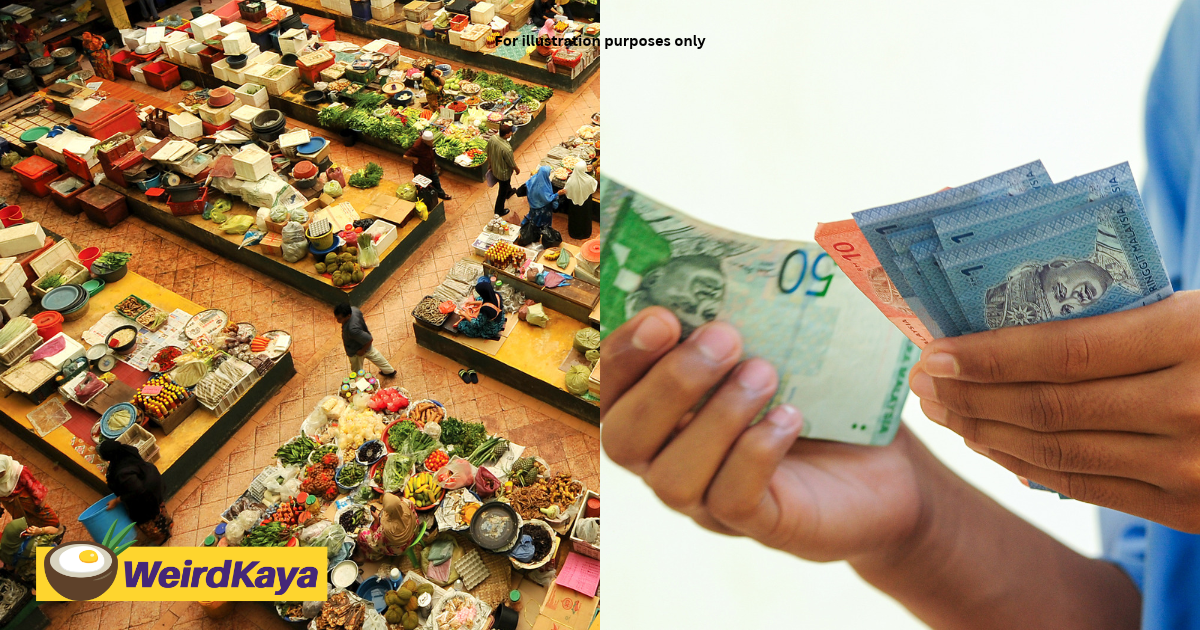
Hearing another customer’s bill might give you an idea of how much a meal costs. But one Malaysian claimed their own bill came as a surprise after eating at a market in Kelantan.
In a Threads comment, the individual recalled paying nearly RM30 after hearing a local customer being told his bill was RM10.
Decided to eat after hearing the price

According to the commenter, the incident happened some time ago at Pasar Siti Khadijah.
They had spotted large prawns and overheard a Kelantanese man asking how much he owed after finishing his meal.
The trader reportedly told him RM10, which the commenter thought was cheap.
They then decided to eat there themselves, only to receive a bill of nearly RM30.
The commenter believed speaking with a Kuala Lumpur accent had contributed to the higher charge. However, their account did not specify whether both customers had ordered the same dishes or portions.
Others share similar experiences

The comment appeared in a Threads discussion about whether speaking the local dialect affects the prices customers are charged.
Another person recalled buying coconut water in Kedah around eight years ago.
They claimed they paid RM3 on the first day after ordering by holding up one finger. On the second day, they simply said “satu” and paid the same amount.
However, when they ordered using a full sentence on the third day, they claimed the price increased to RM4.
Meanwhile, another commenter described being quoted over RM40 for batik in Terengganu.
They claimed someone speaking the Terengganu dialect was offered RM30 for the same item and material. After that experience, they brought a friend from Terengganu along on their next shopping trip.
Not everyone had the same experience
Others said speaking the local dialect had never earned them cheaper prices.
One Kelantanese commenter said they had never received a discount simply for speaking Kelantanese, including while living in Kota Bharu.
Another person who had studied in Kota Bharu said they paid the same prices as everyone else despite not being from Kelantan, although they still spoke with an East Coast accent.
While several commenters suspected their accents affected what they paid, the accounts did not establish whether dialect, order differences or other factors explained the prices.