
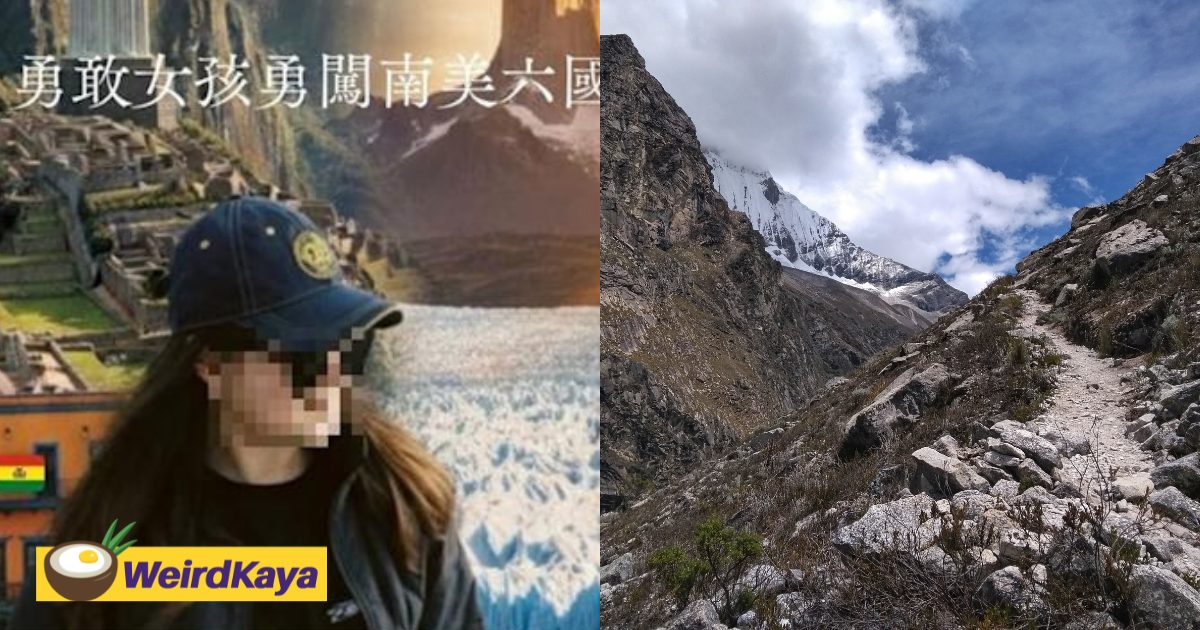
A young Taiwanese traveler has ignited a firestorm of debate across Asian social media after successfully crowdfunding her solo dream vacation to South America.
The woman, identified only as a netizen in her 20s, raised over NT$130,000 (approximately RM16,200) by telling donors she would be “traveling on their behalf.”

According to NowNews, the campaign, which appeared on a popular crowdfunding platform in Taiwan, sought to cover the majority of her NT$180,000 (RM22,400) budget for a multi-country expedition through six South American nations.
Her pitch? In exchange for the public’s hard-earned cash, she promised to compile a “comprehensive travel guide” to help others avoid the same pitfalls and risks she might encounter.
“Online begging” or modern content creation?
The backlash was swift and brutal. Within days, the campaign went viral for all the wrong reasons.
Critics slammed the woman for what they termed “digital panhandling,” with many pointing out that most Malaysians and Taiwanese alike have to save for years to afford such a luxury.
“If she’s traveling on my behalf, does that mean I get the passport stamps too?” one netizen mocked.
“I’m short on my housing loan—can I start a campaign claiming I’m ‘living in a house on behalf of the homeless’?” another wrote.
Malaysian social media users, known for their sharp wit, quickly drew parallels to the local “begpacker” phenomenon in which Western travelers who sell postcards or busk on the streets of Kuala Lumpur to fund their Southeast Asian adventures.
The “influencer” defense
In her original post, the traveler defended the move as a professional endeavor.
She argued that the risks of solo travel in South America, ranging from language barriers to safety concerns, merited a “sponsorship” because her documented experience would serve as a valuable resource for future travelers.

However, the “service” she offered (a PDF guide and social media updates) failed to convince the masses.
Many argued that established travel bloggers and YouTubers provide this information for free, funded by their own savings or legitimate brand sponsorships rather than direct public donations.
The aftermath
Following the wave of “internet vitriol,” the woman issued an apology, admitting she had “not thought through the social implications” of her request.

She has since pulled the campaign from the platform and deactivated her social media accounts.
READ ALSO: