

Torres Pit, a Hong Kong-based content creator, captured himself filling up his car and reacting with unrestrained and, by his own account, genuine disbelief at how little it cost.
In the video, shared to his Instagram account, Torres Pit can be heard switching between Malay and Cantonese as the numbers ticked up on the pump.

“Sangat murah,” he exclaimed “very cheap” before turning to a stranger nearby and, in a moment that quickly became the clip’s most-shared frame, offering to pay for their fuel as well.
Highlights difference in fuel pricing
Malaysian citizens with valid driving licences pay RM1.99 per litre for RON95 petrol, a subsidised rate made possible by the government’s BUDI 95 programme.
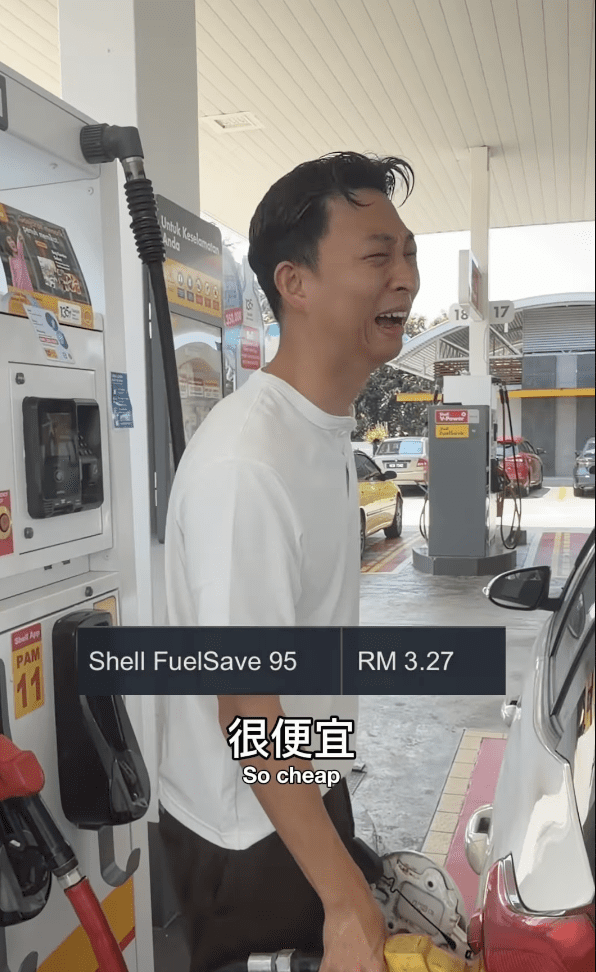
Foreigners, however, fall outside the subsidy scheme entirely, and must pay the unsubsidised market rate of around RM3.27 per litre, or opt for the premium RON97 grade instead.
RON95 Petrol at a Glance
| Subsidised rate (citizens) | RM 1.99 / litre |
| Unsubsidised rate (foreigners) | RM 3.27 / litre |
| Monthly citizen quota | 300 litres |
| Eligibility | Valid Malaysian driving licence |
For context, fuel prices in Hong Kong are among the highest in Asia, where a litre of unleaded regularly exceeds HK$30 roughly RM15 at current exchange rates.
Seen against that backdrop, Torres Pit’s reaction looks less like theatrics and more like an entirely reasonable response to sticker shock in reverse.
Netizens reacts
The post spread quickly, drawing particular attention from Malaysian users who recognised the petrol station setting and found themselves on the receiving end of a foreigner’s admiration for something they had long taken for granted.

Some asked if he planned to join the Malaysia My Second Home (MM2H) programme, while others responded with jokes about the country’s fuel subsidies.

Subsidies under the spotlight
The BUDI 95 system, introduced as part of Malaysia’s broader move toward targeted fuel subsidies, links RON95 eligibility to a driver’s national identification, preventing non-citizens from accessing the lower rate.
The monthly cap of 300 litres per licence is designed to curb excessive usage while keeping costs manageable for everyday commuters, but it is now facing challenges due to rising global crude oil prices.
READ ALSO: