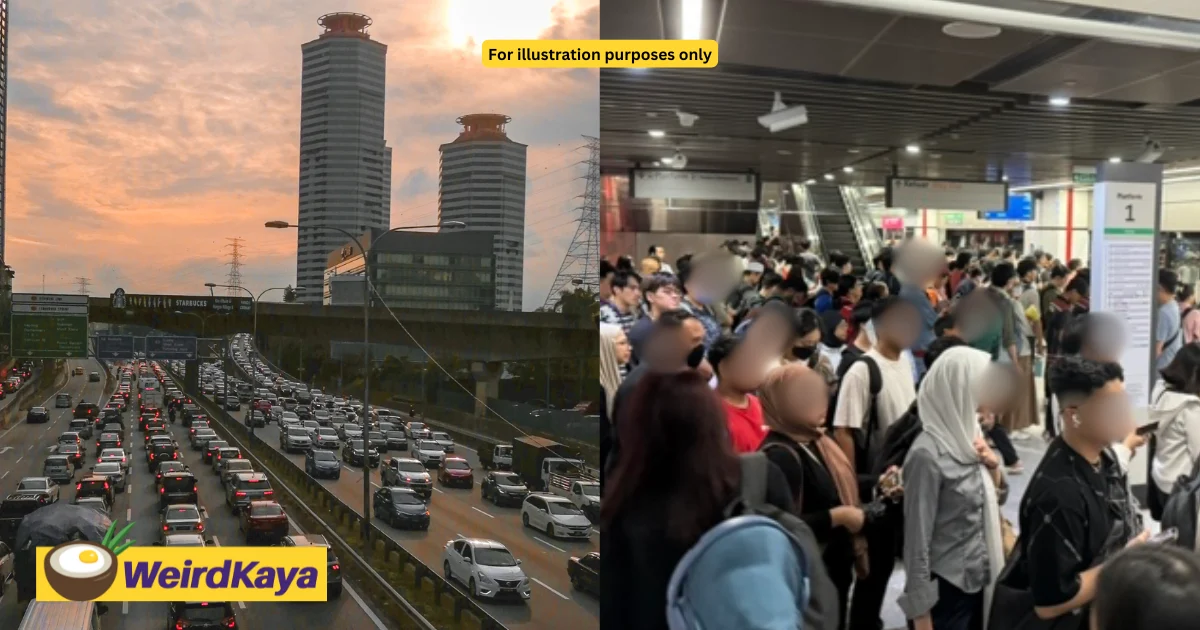
The morning routine has started to feel painfully familiar for many Malaysians. Wake up earlier just to beat the jam.
Open Waze and watch the roads turn red within minutes.
Squeeze into trains that are already packed before peak hour even officially begins. By the time you reach the office, half your energy is already gone.
In a recent social media post that struck a chord with thousands, the former HR practitioner called on companies planning a return-to-office mandate to seriously consider reinstating work-from-home (WFH) or hybrid arrangements instead.

She pointed out that traffic congestion has become increasingly unbearable, while public transport is often packed to capacity, making daily commuting both exhausting and inefficient for workers.
“By 2026, companies that are pushing for full office returns should really consider WFH arrangements again. Just look at the traffic lately. Public transport is full,” she wrote, adding that flexible work arrangements do not harm companies and actually help boost employee morale.
Her post quickly gained traction online, sparking a wider conversation about trust, productivity, and outdated management mindsets.
“Still treat the office like school”
Many netizens echoed her sentiments, arguing that the resistance to WFH often comes down to a lack of trust from management rather than actual performance issues.
One commenter remarked that many bosses still operate with an old-school mentality, assuming employees are not working when they are out of sight.
“Most big bosses are still dinosaurs. They don’t trust staff and always think people don’t work during WFH. They still treat the office like a school,” the user commented.

Others questioned the logic of forcing employees to spend up to two hours in traffic daily, especially when meetings and tasks can be handled online just as effectively.
“I don’t even understand why bosses are willing to face traffic jams for one to two hours just to go to the office. Meetings are online anyway,” another user shared.

Not everyone agrees
However, not all responses were in favour of WFH.
Some netizens acknowledged that a small group of employees had previously abused the flexibility, making it harder for employers to justify continuing such arrangements.
“There are cases where people abused WFH. I don’t blame some bosses for refusing it,” one commenter said.
Still, many felt that isolated cases should not outweigh the broader benefits of flexible working, especially at a time when commuting conditions continue to deteriorate.