
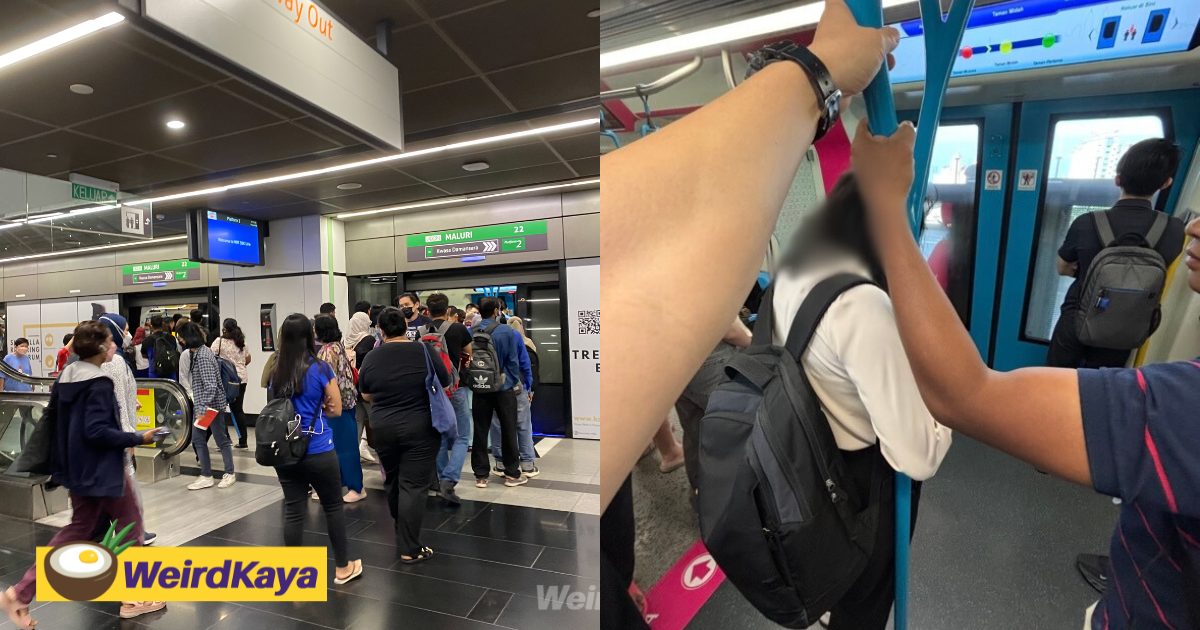
A heated debate has erupted across social media after a frustrated commuter shared a photo of a passenger leaning her entire back against a vertical grab pole on a crowded MRT train.
A viral spark for commuter frustration
The post, which quickly went viral, has touched a nerve among daily public transport users who frequently find themselves struggling for a handhold during peak-hour rushes.
The OP did not mince words, captioning the image with a sharp reminder that the handrail is meant for passengers to hold and is not a personal “darling” to be hugged or leaned on.
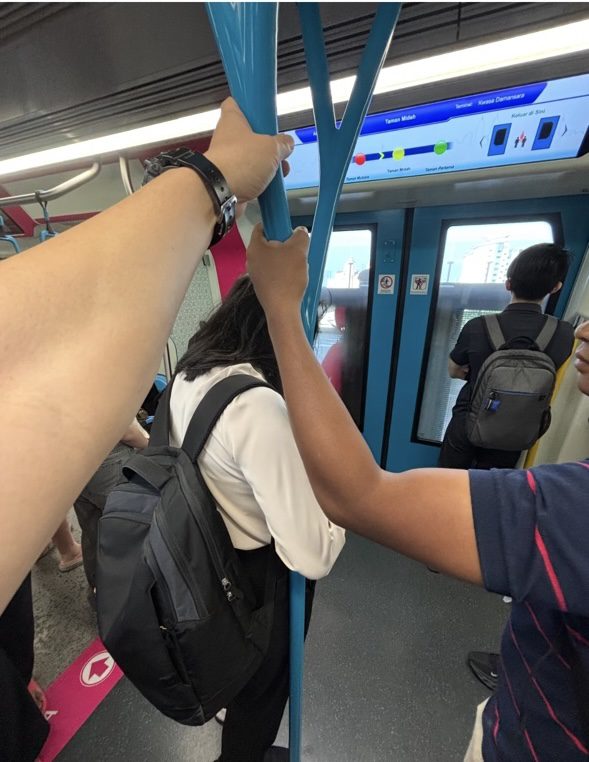
This sentiment resonated with many netizens who have experienced the annoyance of being unable to steady themselves because a single person has claimed the entire pole as their private backrest.
Health concerns and “off-peak” habits
One netizen recounted a particularly awkward encounter where they had to “sneak” their hand into the gap of a stranger’s armpit just to reach the railing, hoping the person would take the hint.
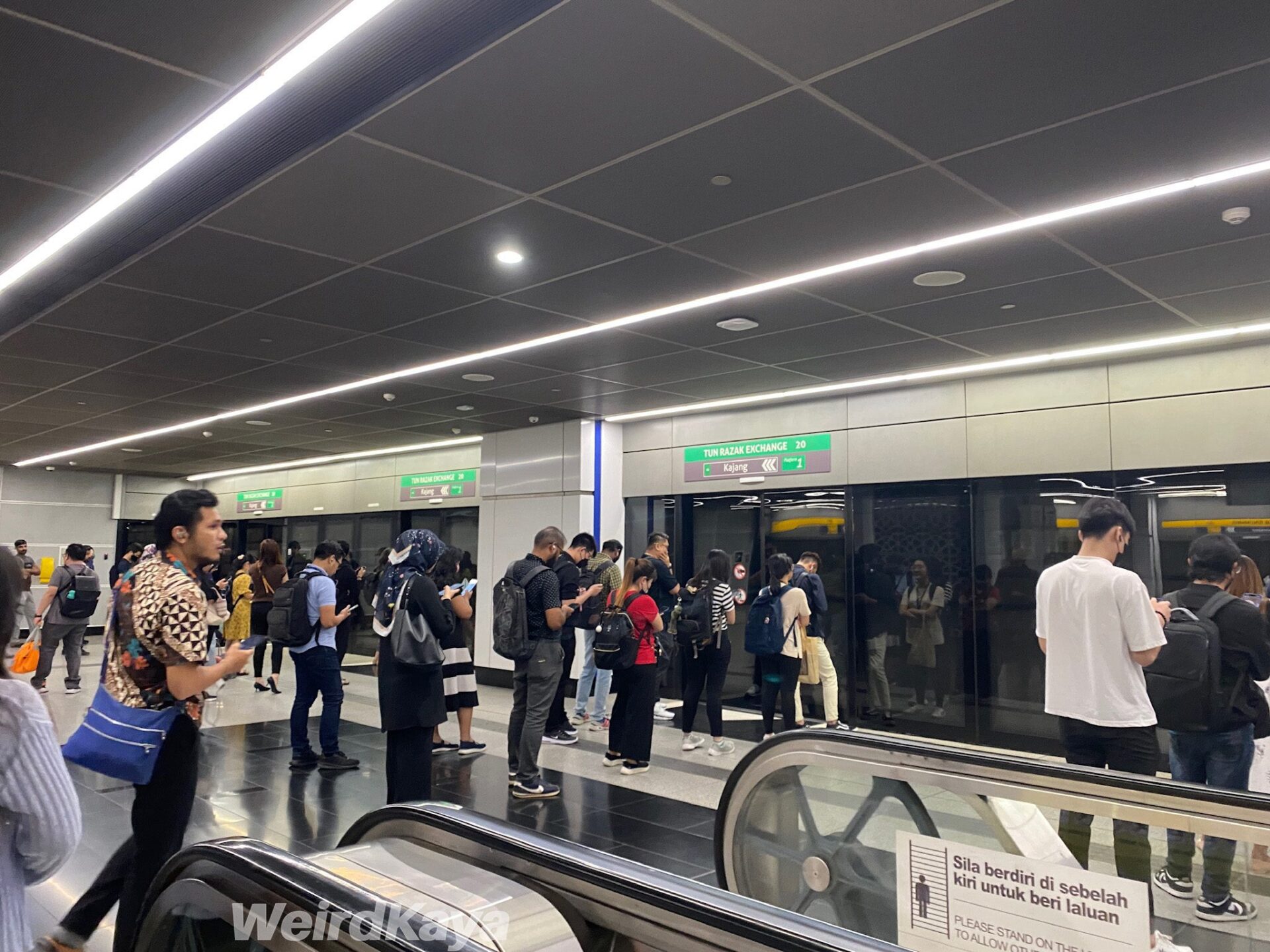
Another shared a photo of a passenger’s long hair draped over the pole, questioning the hygiene and common sense of those who force others to choose between falling over or grabbing a stranger’s tresses.
There were even stories of desperate commuters who, finding no available space on the pole, accidentally grabbed a stranger’s hand for support, leading to startled reactions and sudden movements in the cramped carriage.
However, the discussion was not entirely one-sided.
Some said otherwise
Some users stepped forward to defend the act of leaning, citing physical discomfort or health issues.
One commenter expressed that they sometimes suffer from severe motion sickness and feel they have no choice but to lean for stability.
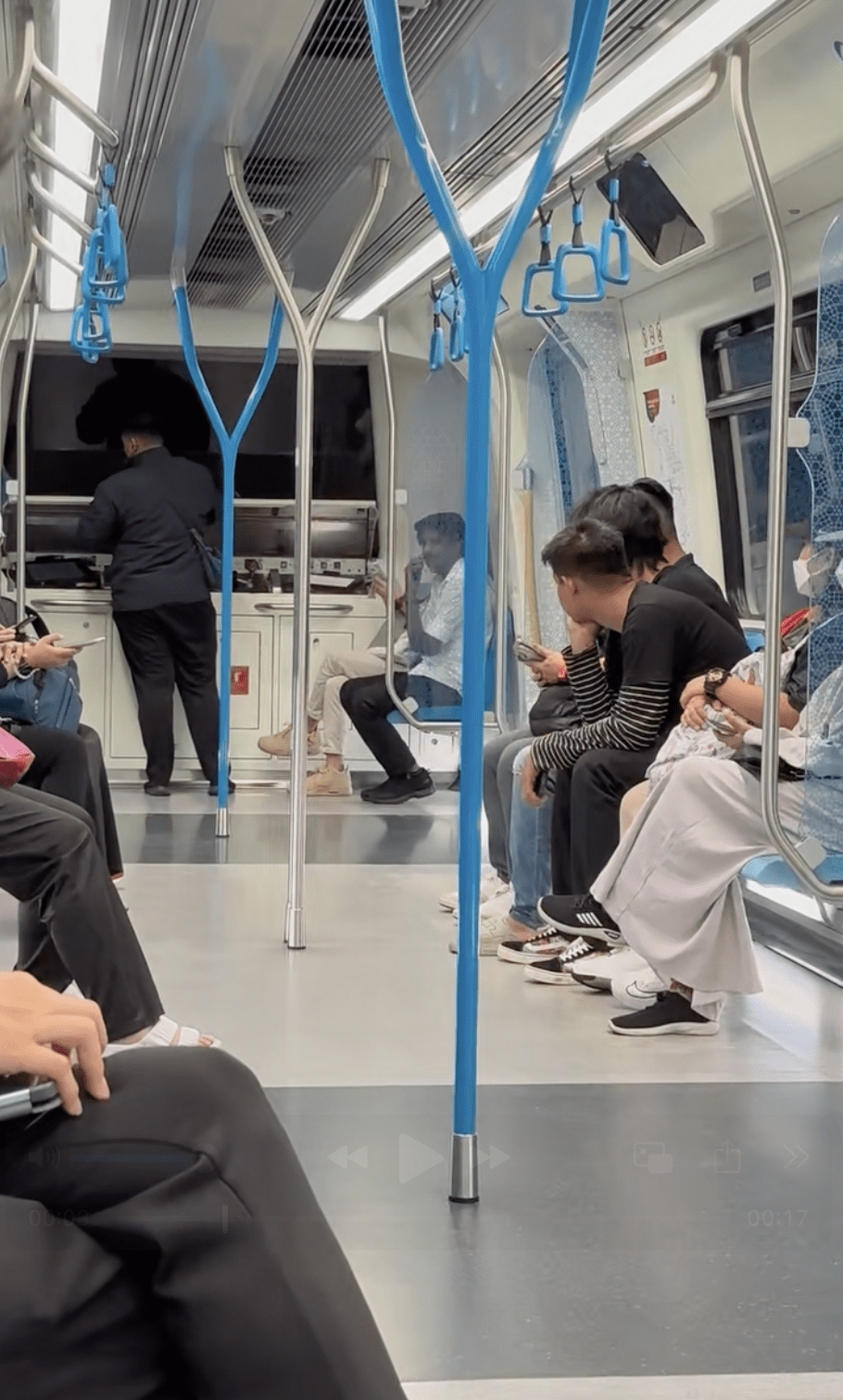
Others argued that “pole-hugging” is perfectly acceptable when the train is empty, though they admitted that once the carriage fills up, it is basic etiquette to move and make room for others to grip the rail.
Amidst the complaints, a subset of the online community questioned the ethics of “online public shaming.”
These users argued that instead of taking a photo to post on social media, the OP should have communicated directly with the passenger.
They suggested that many people might be “unaware” or “blur” and would likely move if asked politely.
“If it’s a first-time offender, you should say it to their face instead of putting them on trial online,” one netizen noted, emphasizing the need for direct communication over digital confrontation.