
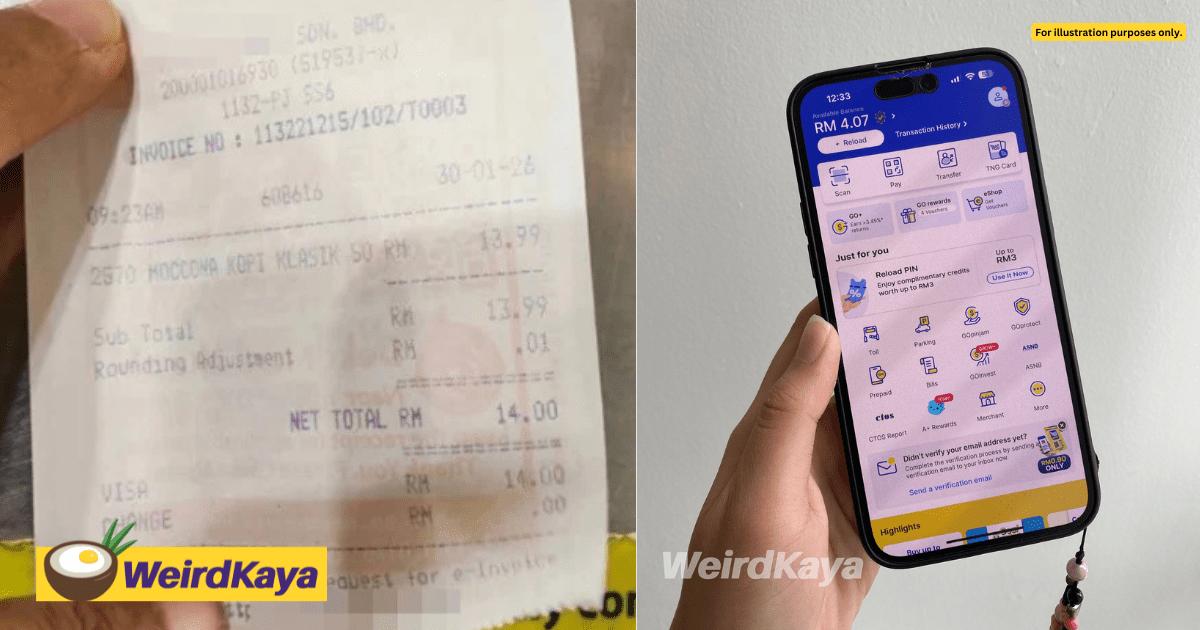
A Malaysian man has sparked discussion online after claiming that his RM13.99 purchase was rounded up to RM14 even though he paid using an electronic payment method.
The issue was shared in a post on Threads, where the man said he bought a bottle of instant coffee at a convenience store and paid via card.
According to the receipt he uploaded, the item was priced at RM13.99, but the final amount charged was RM14 after a rounding adjustment.
“Why is there rounding for e-payments?”
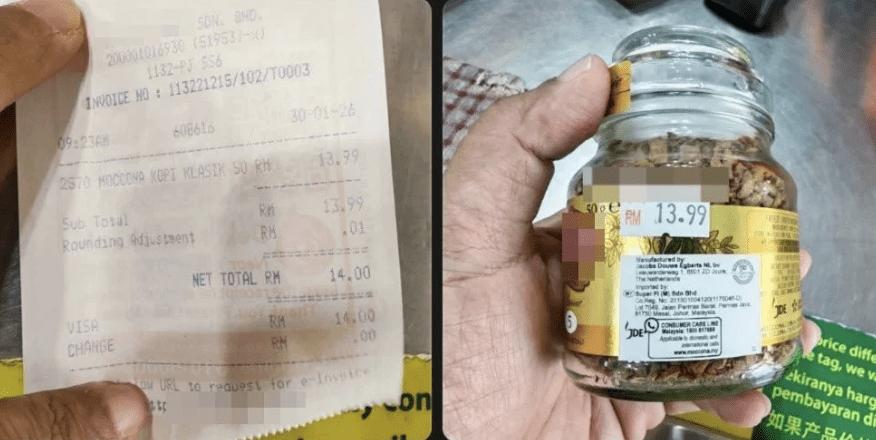
In his post, the man questioned why rounding was applied when he did not pay in cash.
“If this was cash, I could understand,” he wrote. “But with e-wallet or card payments, can’t they just charge RM13.99?”
He also shared transaction details showing that the purchase took place on Jan 30 and that payment was completed via card.
The post quickly gained attention, with netizens debating whether rounding should apply in a cashless transaction.
Some users questioned whether it was appropriate or legal to round up amounts when customers are not using physical cash.
Many pointed out that the rounding mechanism has long been part of Malaysia’s payment system and applies to the total bill amount, regardless of payment method.
Several netizens also noted that while a one-sen difference may seem small, it could add up over time when applied to a large number of transactions.
What Bank Negara Malaysia’s guideline says
Some users cited Bank Negara Malaysia’s official guideline on the rounding mechanism.
According to the guideline, the total bill amount is rounded to the nearest multiple of five sen.
Bills ending in 1, 2, 6, or 7 sen are rounded down, while those ending in 3, 4, 8, or 9 sen are rounded up.
For example, a total bill of RM82.01 would be rounded down to RM82.00, while RM82.04 would be rounded up to RM82.05.
This means a bill ending in 9 sen, such as RM13.99, would be rounded up to RM14.00.