
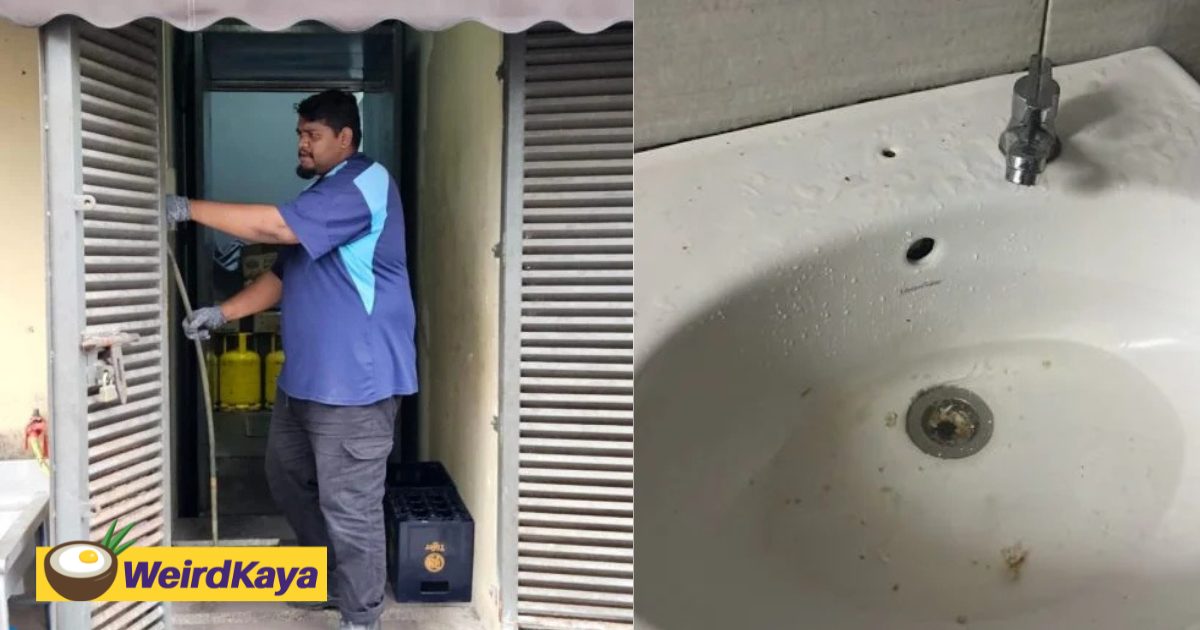
A food court operator in Johor Bahru has raised concerns over a growing hygiene and cost burden after hundreds of non-customers allegedly began using her premises’ toilets daily, following the opening of a neighbouring electric therapy chair trial centre.
Wang Hui Wen (transliteration), 35, who operates a food court along Jalan Setia 3/3 in Taman Setia Indah, said the problem started about six months ago when the adjacent therapy chair centre began operating.
Since then, “borrowing the toilet” has become a daily occurrence, with at least 300 people who do not patronise the food court reportedly using the facilities each day.
Water bill increased from RM800 to RM2000
According to Wang, the sudden surge in toilet usage has led to serious sanitation issues and rising operational costs.
The toilets now need to be cleaned more than six times a day, while the use of cleaning liquid has jumped from seven containers to 15. As a result, the food court’s monthly water bill has increased sharply from around RM800 to about RM2,000.
She added that the excessive use has caused frequent blockages, sewage backflow, and repeated clogs in sinks and toilets, forcing the business to hire additional workers to clear drainage channels.
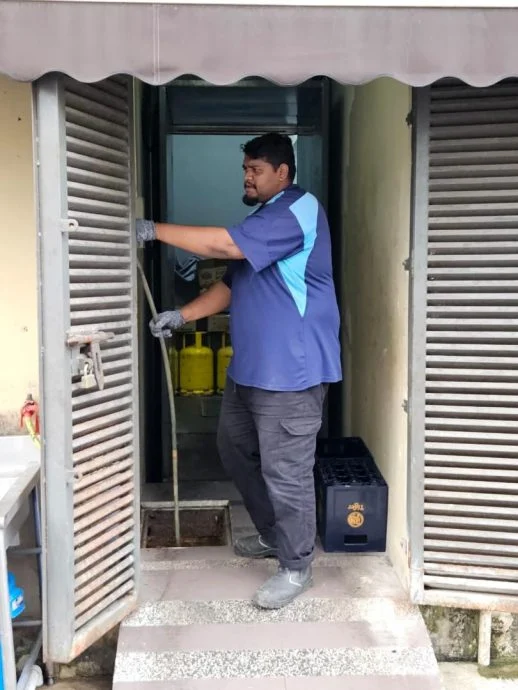
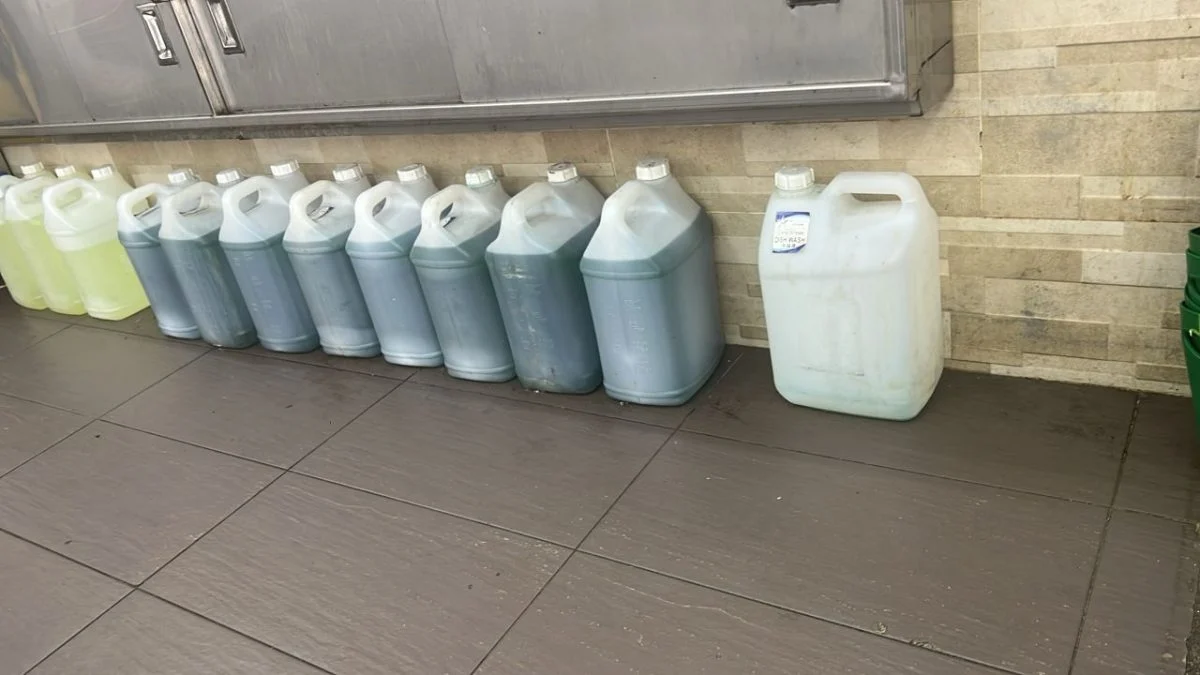
Some users have no civic sense at all. They relieve themselves anywhere in the toilet. Even after we clean it, the same thing happens again,” Wang said.
She also claimed that many of those using the toilets do not spend money at the food court, while some groups would share a single cup of tea among eight people before all heading to the restroom.

Affected paying customers’ access to the toilets
The food court houses 17 stalls and already sees heavy foot traffic on normal days. Wang said the influx of non-customers has made it difficult for staff and paying customers to access the toilets, affecting both customer experience and business operations.
In some cases, Wang said she tried refusing access, only to be scolded and accused of being heartless and unkind.
They don’t realise this is moral coercion. Even if only half of the 300 people come in a day, we still can’t cope with the hygiene demands,” she said.
Complaint lodged to no avail
Wang lodged a complaint with the Johor Bahru City Council, but was informed that the matter falls outside its enforcement powers. She was told that shop operators have the right to refuse toilet access to non-customers and was advised to coordinate with neighbouring businesses.
However, when she approached the therapy chair centre, Wang said the person in charge told her their own toilet had been converted into a storeroom and could not be used, leaving her feeling frustrated and helpless.
Wang hopes media coverage will help raise public awareness about civic responsibility, stressing that most shop toilets are meant for internal or customer use, and are not designed to handle large volumes of external foot traffic.
Commenting on the issue, Johor Bahru city councillor Chen Shanshan said the council is unable to intervene directly. She suggested that affected businesses consider implementing a pay-to-use system or restricting toilet access to paying customers as a practical way to address the problem.