Exclusive Story by WeirdKaya – Proper accreditation to WeirdKaya and consent from the interviewee are required.
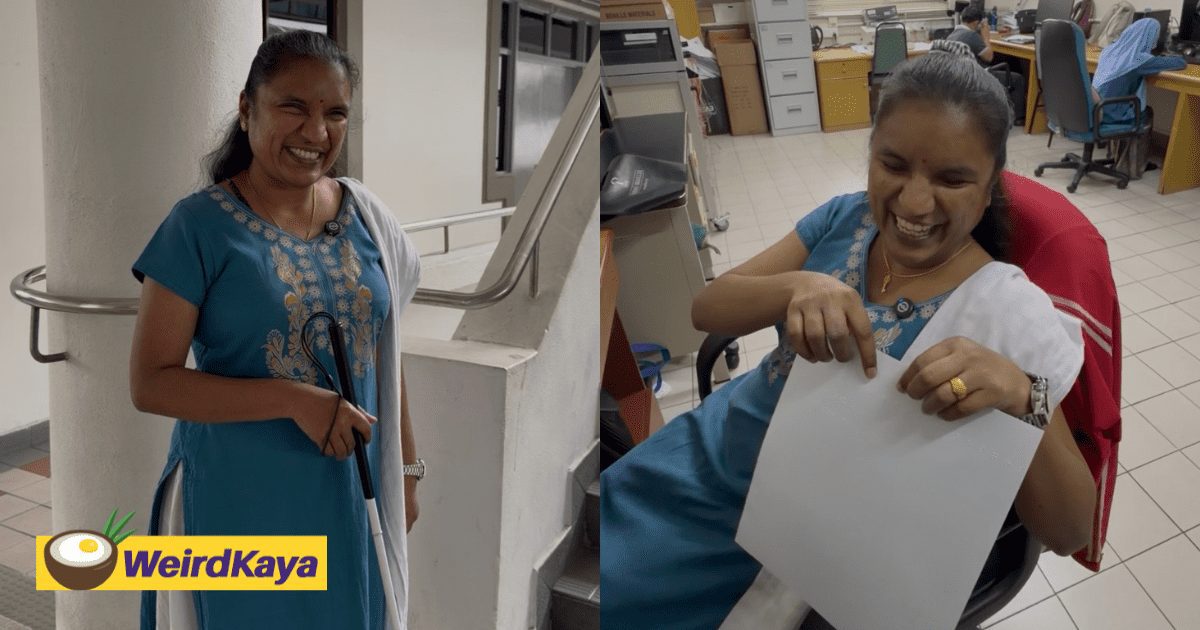
39-year-old Uma is a professional Braillist and Braille publisher who writes and translates books for blind children so that they have the chance to read, learn, and feel less alone in a world built for sighted people.
Like them, she was born blind and her journey began when her parents sent her to a boarding school for visually impaired students at the age of seven.
Discovering Braille
On her first day of school, Uma’s teacher handed her a Braille book but she had little idea what it was and what was its purpose.
“I didn’t know what Braille was. I just played with the dots because it felt weird and interesting.
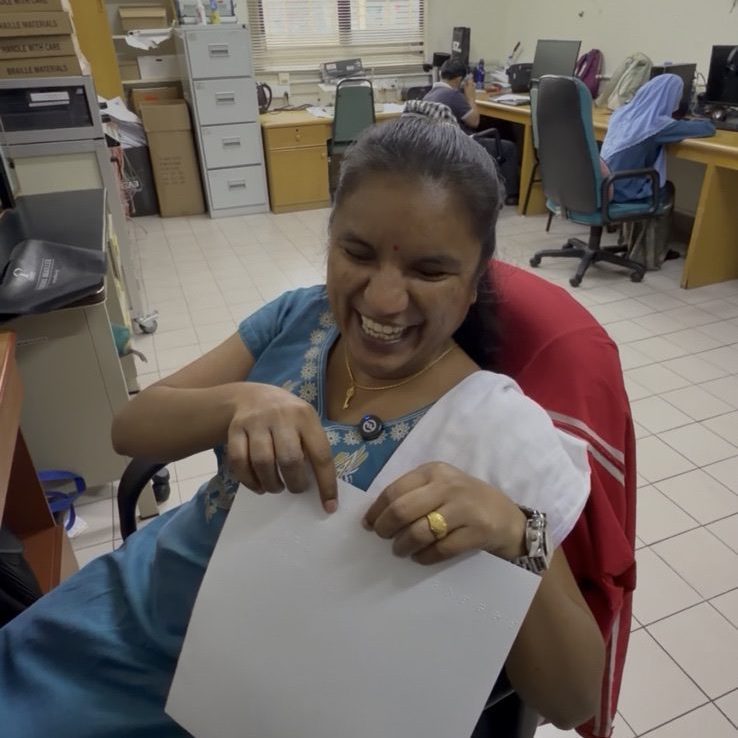
“After some tutoring from my teacher, I mastered writing all the alphabets in Braille within four months for both reading and writing.
“My time at the boarding school also made me realise that there were many people just like me and that I wasn’t alone in living my life as a blind person,” she said.
Excelled in studies
Unlike most schools, Uma attended classes which had less than 10 students in a classroom, which allowed teachers to give full attention to everyone.
Shen later sat for every national exam that was compulsory for Malaysian students such as UPSR, PMR, and SPM. To everyone’s amazement, she achieved flying colours in each of them and was even named as one of the best students in her school.
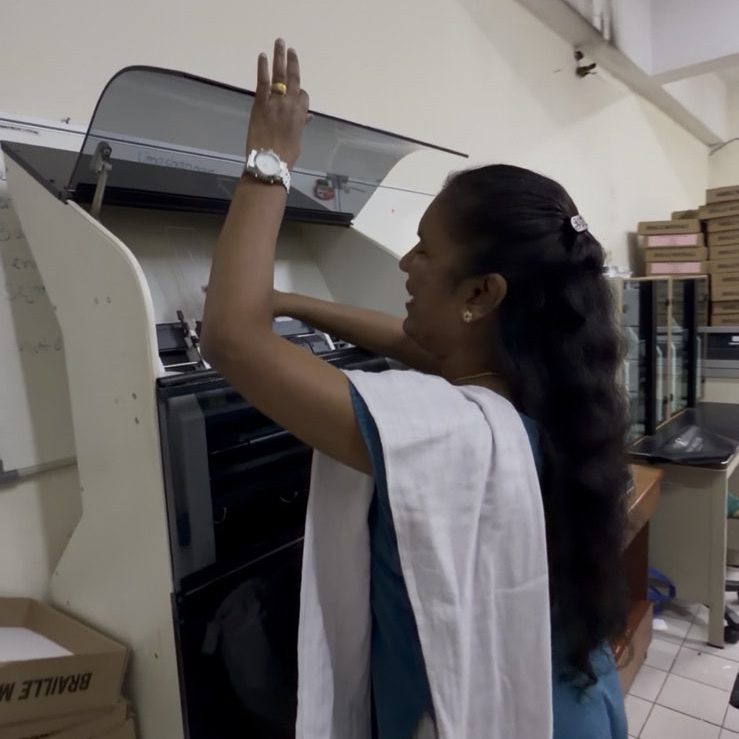
After obtaining her SPM certificate, Uma went on to study STPM before pursuing her Degree in Social Science, where she majored in Anthropology and Sociology.
Despite her academic achievements, Uma said it was anything but easy.
“For sighted students, studying requires giving 100% effort. But for blind students like myself, we had to work 200% harder as there were no Braille textbooks available at the time.”
Being a professional Braille publisher
Today, Uma works as a professional Braillist, a job which she had held for eight years.
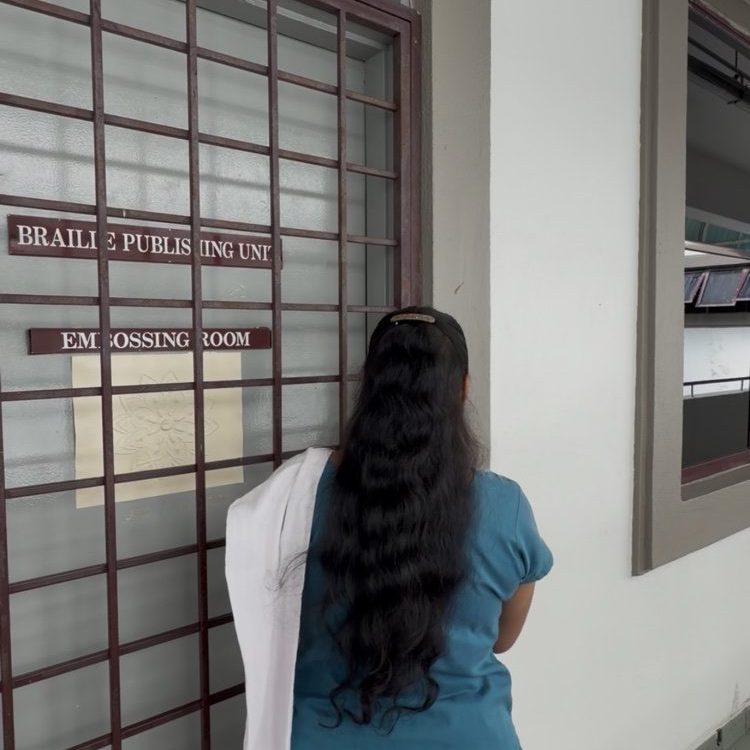
Her job involves writing and translating Malay and English books into Braille, including complex textbooks like science and computer coding materials for secondary school students.
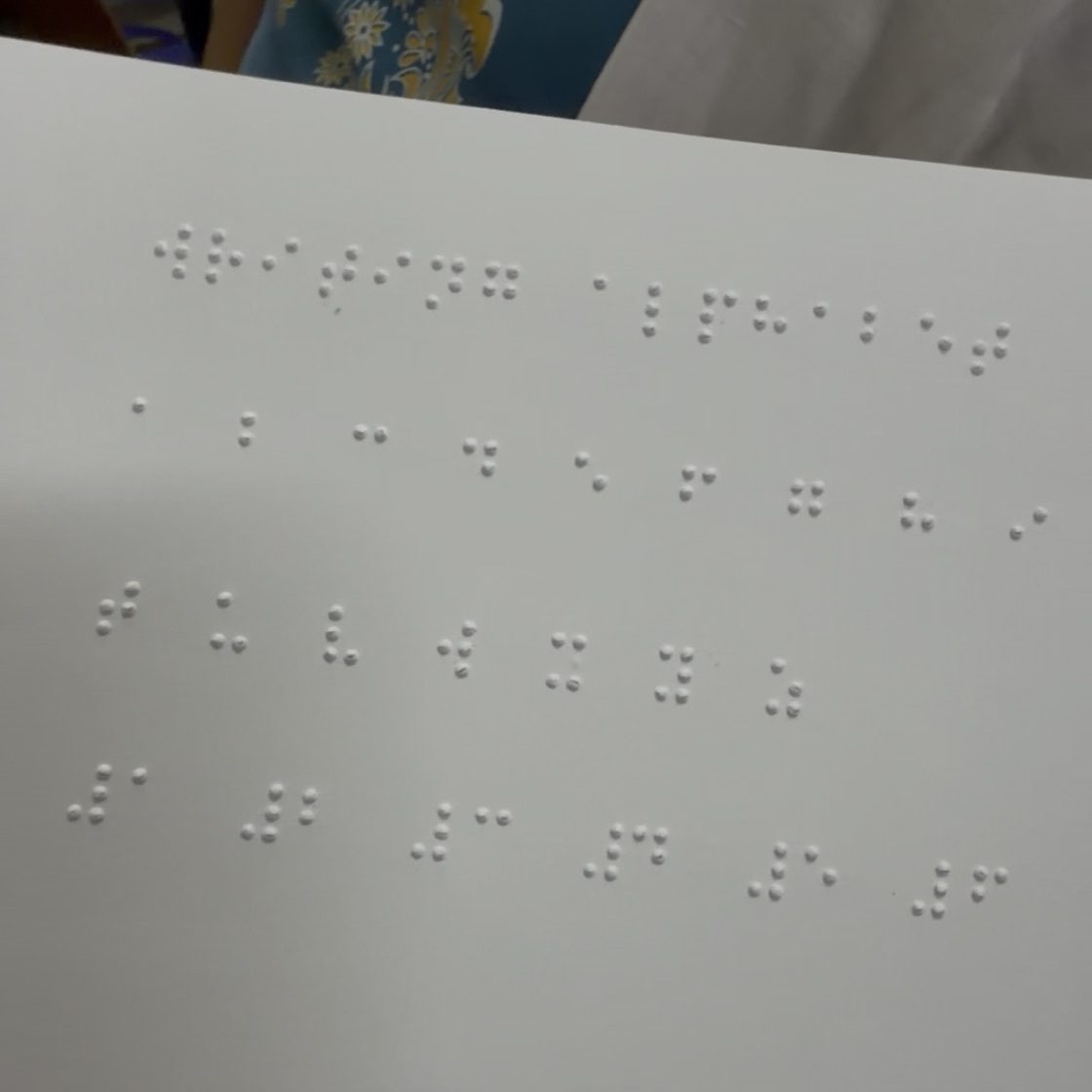
“Many, including sighted folks, find computer science hard. And you can imagine how it was for me when I had to learn all the coding symbols before turning them into Braille.
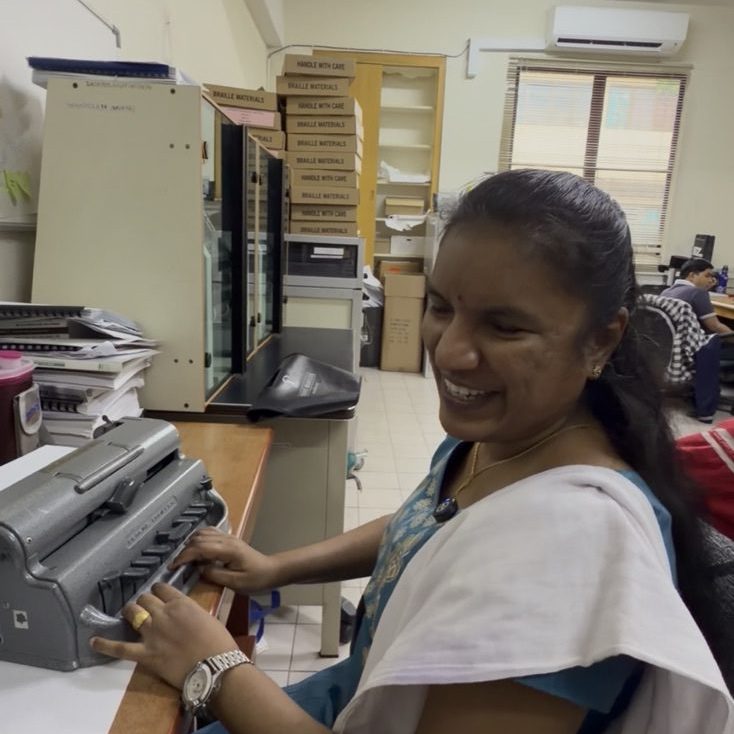
“But, I feel deep sense of joy and fulfillment when blind readers read my Braille books and appreciate them as I know I’ve done something that has left a positive impact on their lives,” she shared.
Unseen challenges
For people like Uma, living without sight comes with daily obstacles that are caused indirectly by the inconsiderate actions of others.
One such example is tactile pavements that exist to guide blind pedestrians being blocked by motorcycles parked indiscriminately is an example, while another is motorists riding along pathways, making it a stressful “obstacle course” for the blind.
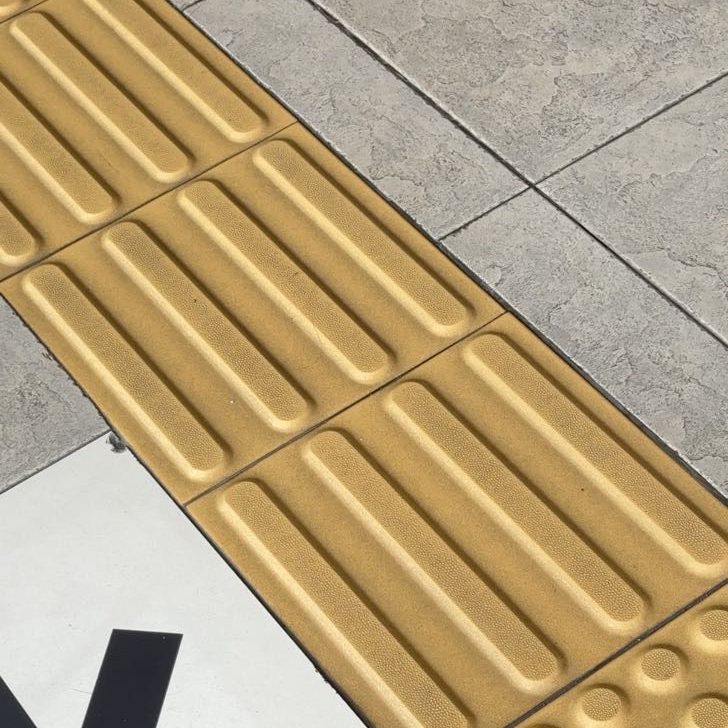
Thankfully, Uma said public transport is much kinder in this aspect, where it is generally manageable and assistance is available most of the time, including help from station staff or police officers on duty.
“As for walking outdoors, we need to be more alert of our surroundings. I’d often choose handbags that I can tuck securely under my arm so that it’s safe from snatch thefts as I cannot see potential danger approaching.”
Uma added that well-intended but poorly executed “assistance” given by strangers is also another challenge in itself.
“If you want to help us, Don’t just pull our clothes or bags. All you need to do is ask, ‘Can I help you?’ and we will tell you how to guide us.
“Just like if someone were to suddenly pull your bag, you’d feel scared. It is the same for us too,” she explained.
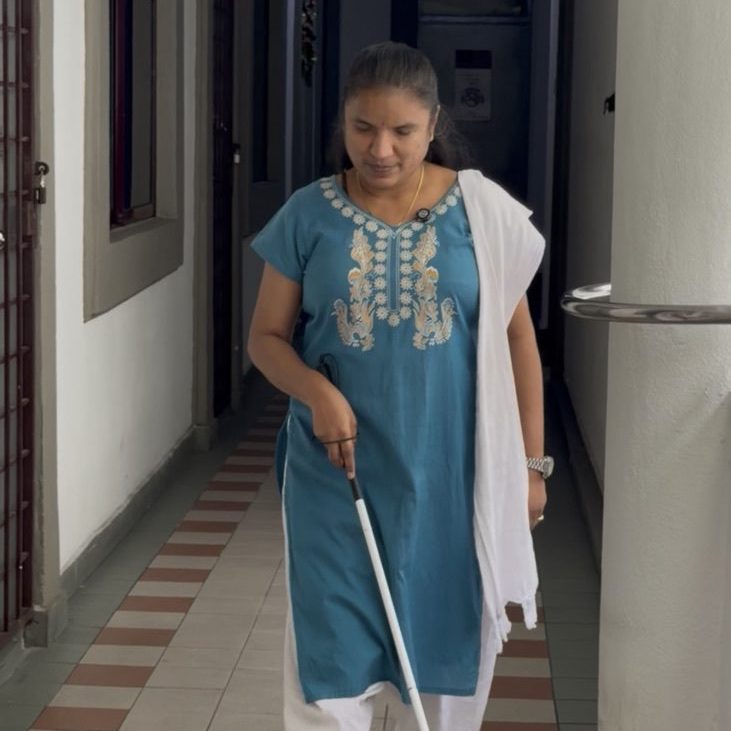
For Uma, the greatest challenge by far isn’t her visual impairment, but society’s assumptions about people like her.
“Many employers think blind people cannot work because they cannot see. But with my job as a Braillist, it’s proof that we can turn what is often seen as a limitation into a lifeline for others.”
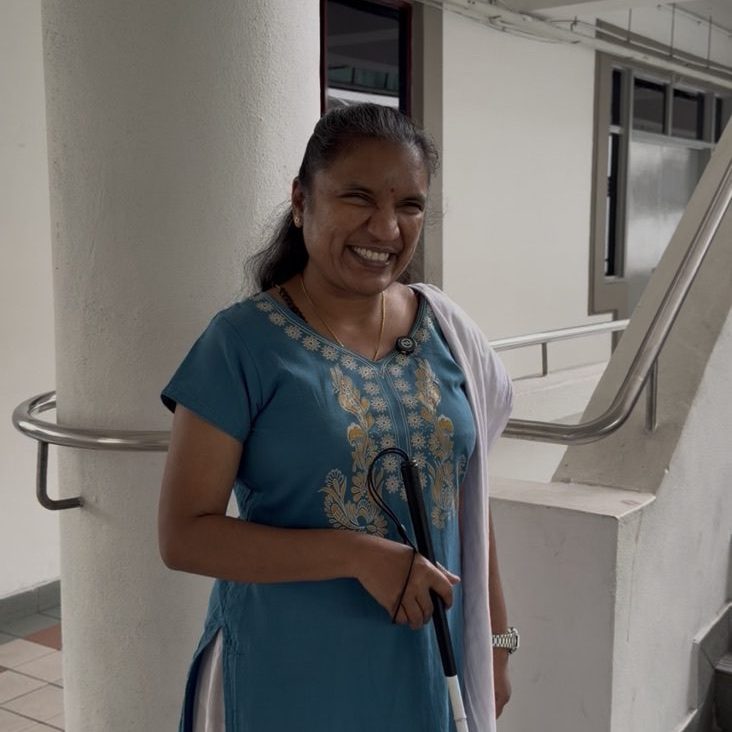
With that, Uma continues her humble profession of transforming books specially for blind children so that they, too, can “see” the world for themselves through Braille.
Exclusive Story by WeirdKaya – If you wish to reproduce this story, please ensure that you obtain consent from the interviewee to maintain factual accuracy and avoid the potential spread of misleading information.

If references/information are used from our story, kindly ensure that proper credit is given along with a backlink to WeirdKaya as acknowledgment of the efforts made by our editors in sourcing and conducting interviews.
READ ALSO: