
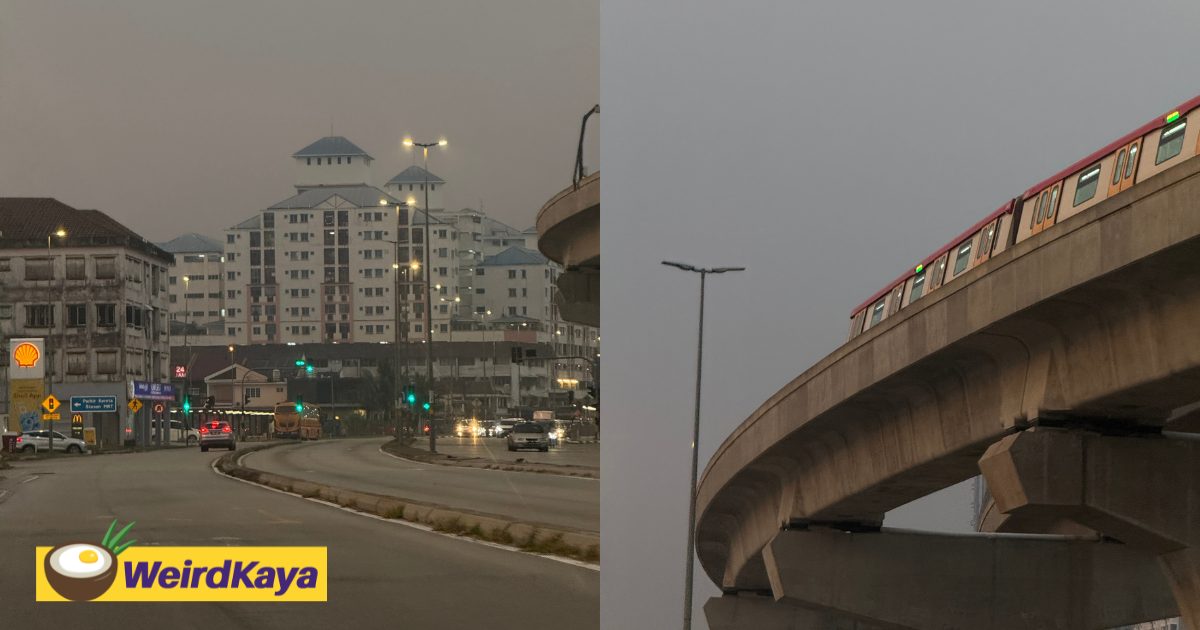
As of 10 am today, four localities — Putrajaya, Jenjarom (Selangor), Seremban and Nilai (Negeri Sembilan) — are registering unhealthy Air Pollutant Index (API) readings, according to data from the Department of Environment’s Air Pollution Index Management System (APIMS).
The API is Malaysia’s primary tool for communicating daily air quality to the public.
Four areas record unhealthy API levels as of 10am
Readings are updated hourly across 68 monitoring stations nationwide and are derived from the highest sub-index among six measured pollutants, which is PM2.5, PM10, ozone, carbon monoxide, nitrogen dioxide and sulphur dioxide.

Nilai’s index first crossed the 100-point threshold at 11 pm Saturday, hovering between 103 and 107 before climbing to 115 by 6 am — and peaking at 124 at 8 am.”
Nilai and Seremban see rapid spike overnight
By 10 am Sunday, the Nilai reading had eased to 102.
Seremban only entered unhealthy territory at 7 am, recording 119, but has since worsened steadily, reaching 130 by the same 10 am snapshot.
As of 1pm, the reading has dropped to 105 but still remain as unhealty level.
The situation in Putrajaya has been the most persistent. The area first breached the unhealthy threshold at 4 am Saturday, and by midday was hovering around 150.
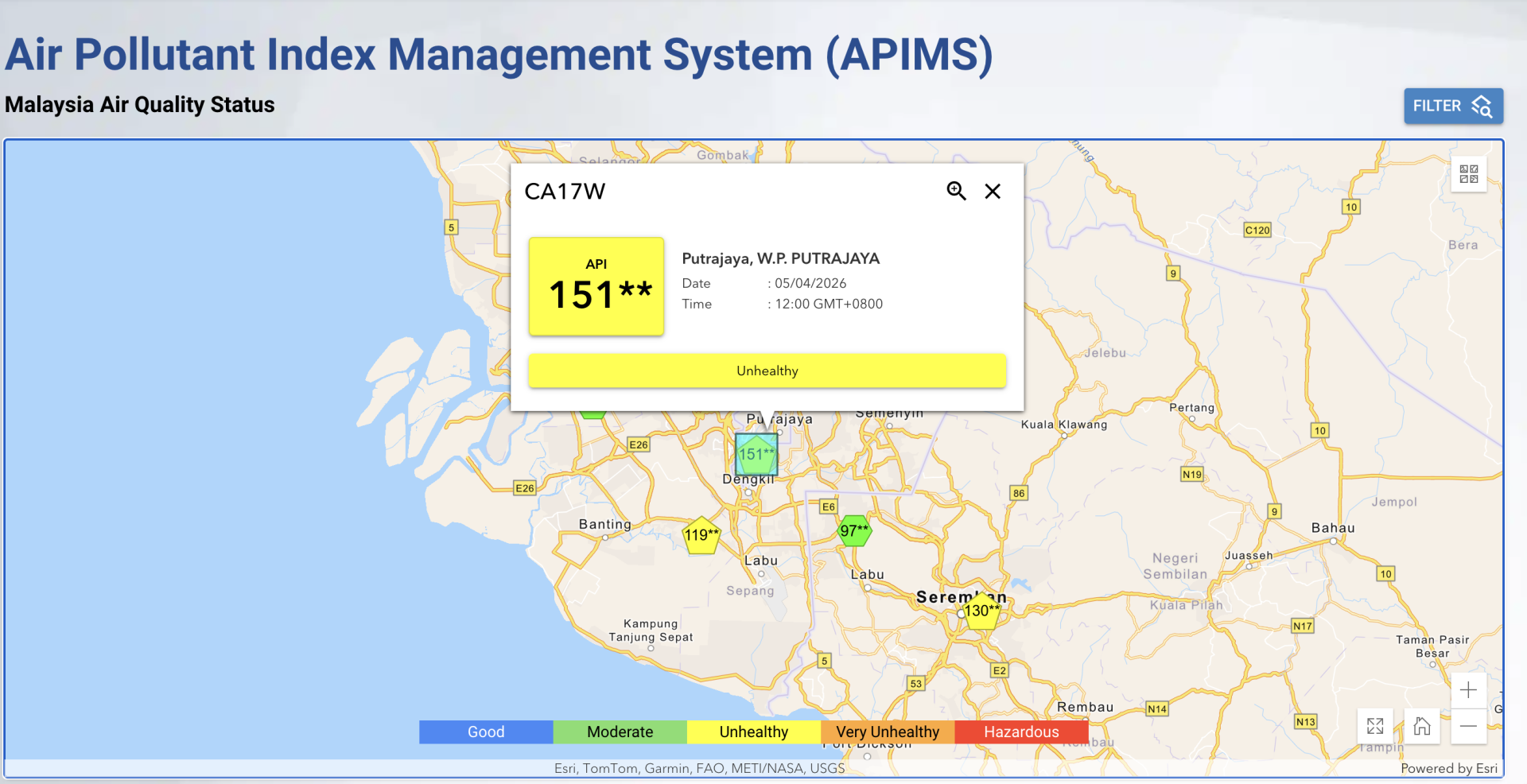
Although readings dipped briefly past midnight, they rebounded to the 150-point level from 7 am Sunday, standing at 152 at the time of reporting.
Jenjarom improves slightly, Klang returns to moderate levels
Jenjarom in Selangor crossed 100 at midnight Saturday (reporting 115) and spent much of Saturday near 150.
Some improvement was recorded from 9 am Sunday, with the 10 am reading at 143.
Meanwhile, Johan Setia in Klang — which had been unhealthy since 2 am Friday and briefly exceeded 160 on Saturday morning — has since recovered to moderate levels, recording 97 as of 10 am.
Most of Malaysia still in moderate range
Nationally, 15 monitoring stations are currently in the good range and 48 stations are at moderate levels.
Under the DOE’s API classification scale, readings of 0–50 are classified as good, 51–100 as moderate, 101–200 as unhealthy, 201–300 as very unhealthy, and above 300 as hazardous.
At the unhealthy level, outdoor activities are restricted for high-risk persons and the general public is advised to reduce vigorous outdoor exertion.
No confirmed cause yet, but conditions point to haze risk
No single cause has been officially confirmed for the current episode, but experts and satellite data point to a combination of factors that frequently drive haze events over the west coast of Peninsular Malaysia at this time of year.
Malaysia’s fire and rescue department has noted a sharp rise in open fire cases nationwide since mid-March 2026, with dry weather significantly raising fire risk.
Johor recorded the second-highest number of open burning cases in the country as of late March.