
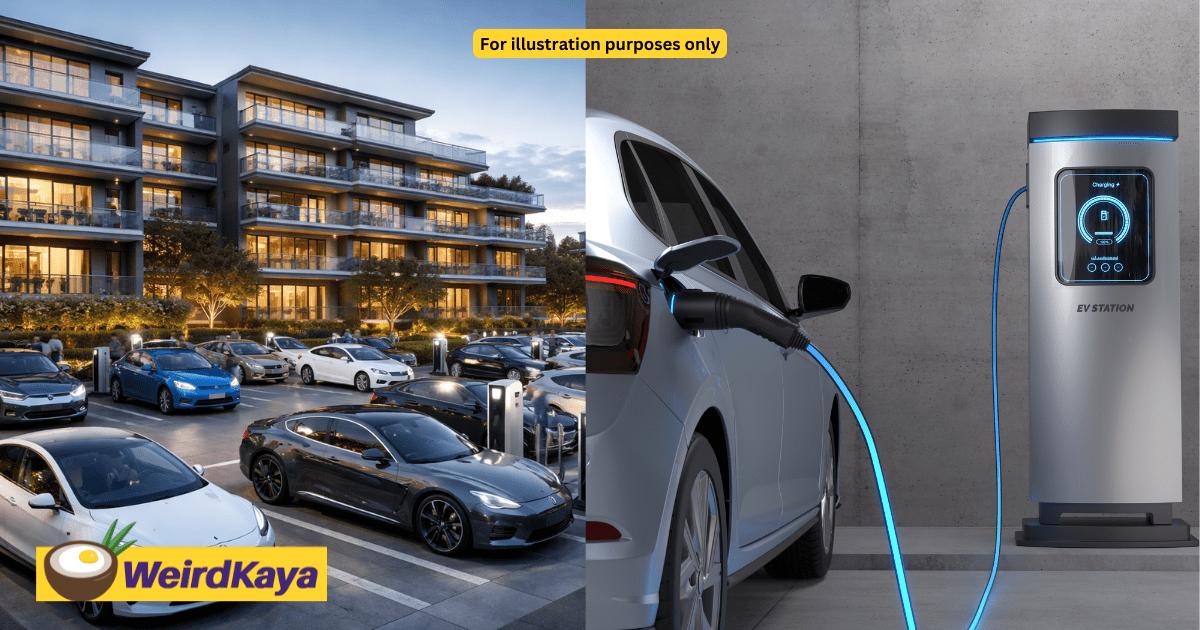
Would you be okay if your neighbour used your building’s shared electricity to charge their electric vehicle (EV)?
That question is now stirring debate among residents at a residential complex after management issued a warning notice over unauthorised EVs charging in the parking area.

A residential community was left frustrated after discovering that an electric vehicle (EV) owner had been secretly using shared electricity facilities in the parking area to charge their car without management approval, reported mStar.
Even more concerning, the act not only violated building management rules, but also posed serious safety risks including potential fire hazards and electric shock incidents.
Management catches EV charging from shared sockets
In a notice issued by the building’s Management Office (MO) on Thursday, management revealed that they had detected the use of common-area power sockets (plug points) for EV charging purposes.

They stressed that any use of public electricity supply within shared residential areas without prior approval is strictly prohibited.
“Using public sockets to charge EVs can cause short circuits, fires, and endanger other residents,” the notice warned.
What raised further alarm was the discovery that some vehicle owners had allegedly run extension cables directly from their homes to the parking area — a practice that clearly breaches safety standards.
Why charging EVs using normal 3-pin sockets is dangerous
Here are some reasons why:
- Risk of fire or explosion
- Electrical overload
- Potential electric shock to the public
- Non-compliance with TNB and Energy Commission safety standards

In light of these risks, proper safety steps for condo and flat residents must be taken, such as:
- Obtain approval from the Joint Management Body (JMB) or Management Corporation (MC)
- Hire certified electrical contractors
- Ensure the building’s electrical capacity is sufficient
- Avoid using extension cables
- Use designated public EV charging stations instead